
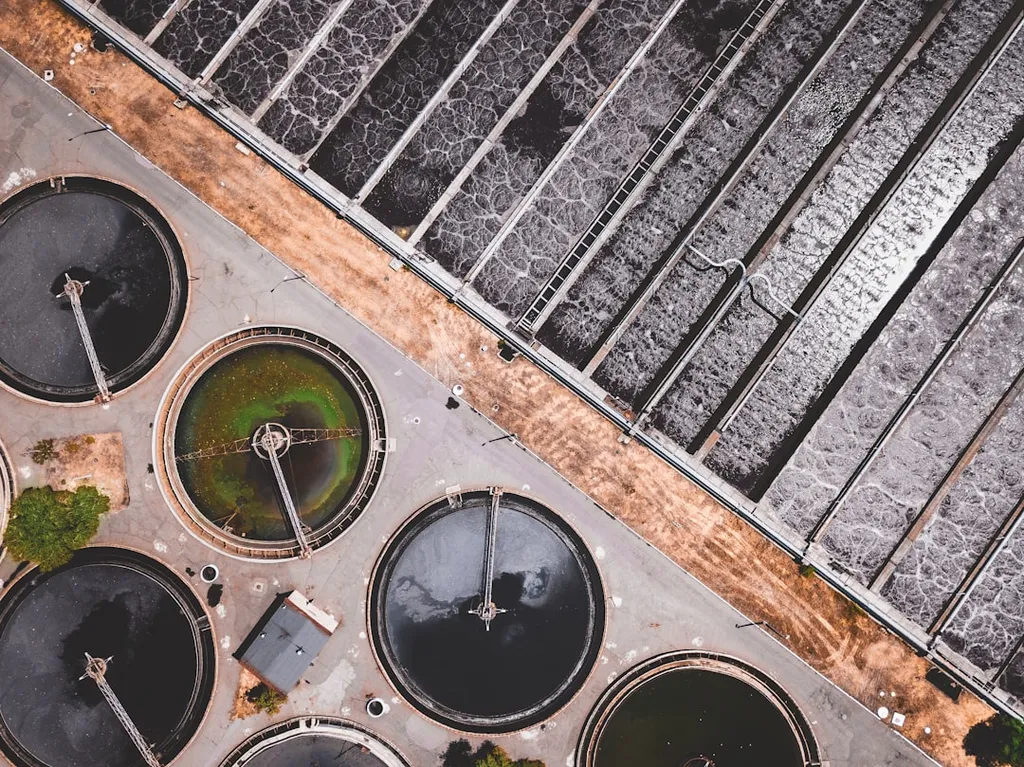
Muhammad Waqas, a researcher at the Institute of Agriculture and Life Sciences at Gyeongsang National University in South Korea, has spent years studying a problem that rarely makes headlines but affects every farmer, consumer, and water user: what to do with pesticide wastewater.
“This isn’t just about cleaning water,” Waqas explains. “It’s about turning a liability into an asset—something that can power farms, fertilize fields, and even fuel vehicles.”
His team’s review, published in *AgriEngineering* (formerly *AgriEngineering* in Korean: 농업공학), sifts through 176 peer-reviewed studies from 2014 to 2025. They don’t just list technologies—they map a future where wastewater treatment plants double as biorefineries, extracting energy and nutrients from what was once discarded.
The core challenge is clear: pesticides in runoff threaten drinking water and ecosystems. Traditional systems struggle to break down these complex chemicals. But Waqas and his colleagues found that hybrid systems—especially those combining biological treatment with advanced oxidation or membrane filtration—can remove over 80% of pesticide residues. More importantly, these systems can recover methane for energy, hydrogen for fuel cells, and even phosphorus for fertilizer.
“Imagine a farm-scale treatment unit,” Waqas says. “After cleaning pesticide-contaminated water, it doesn’t just release clean water—it produces biogas that runs irrigation pumps and generates electricity. That’s circular economy in action.”
The energy sector stands to gain significantly. Biogas from agricultural wastewater could feed into local grids or be purified to biomethane for transport. Nutrient-rich effluents could reduce reliance on synthetic fertilizers, cutting costs and carbon footprints. At district scales, these systems could be networked like mini-utilities, turning rural areas into net energy producers rather than consumers.
One promising pathway is the integration with biobeds—soil-based filters that trap pesticides before they leach into groundwater. When paired with biorefinery processes, these systems could transform contaminated runoff into a resource stream.
Waqas emphasizes scalability. “We’re not just talking about lab experiments. We’re talking about systems that work on a single farm today and could scale to entire watersheds tomorrow.”
The review also highlights life-cycle assessments showing long-term cost savings and environmental benefits. While initial capital costs may be higher, the payoff comes from energy sales, reduced fertilizer use, and compliance with tightening water quality regulations.
For energy companies, investors, and rural communities, this research signals a shift: wastewater isn’t waste anymore. With the right technology, it could become a cornerstone of sustainable agriculture—and a new revenue stream.
As Waqas puts it: “We’re not just treating water. We’re redefining what agriculture can give back to the land—and the grid.”