
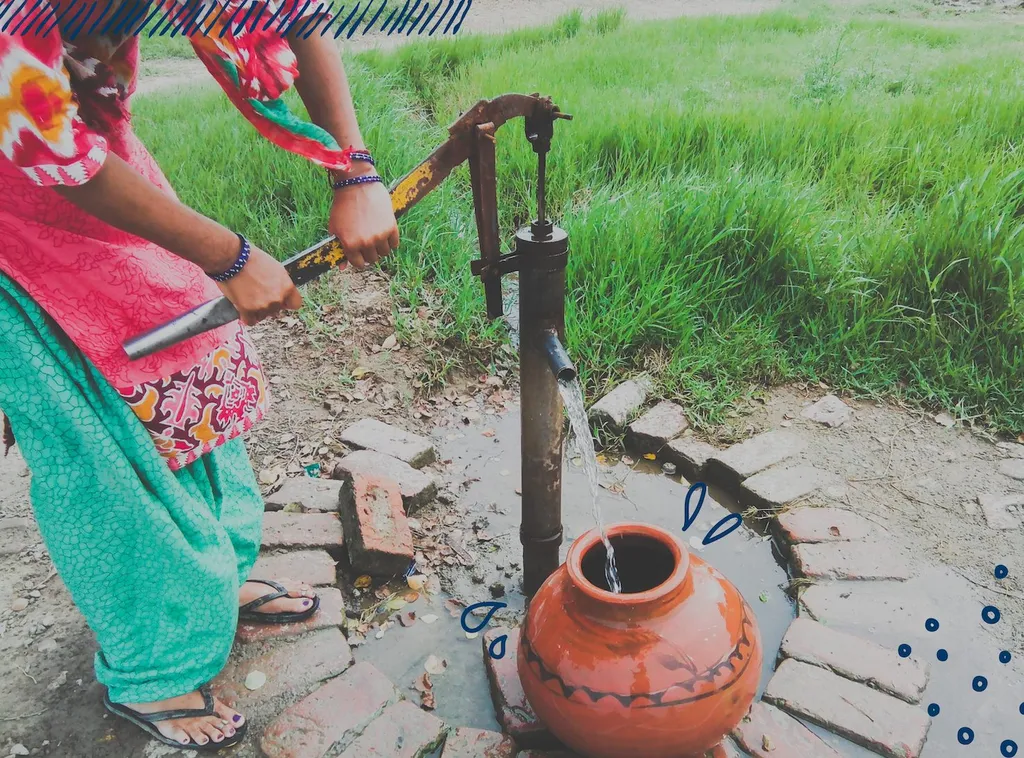
Groundwater is the invisible lifeblood of rural India, silently sustaining millions of households, farms, and small industries. But what happens when that lifeblood turns toxic? A recent study led by Dr. Joydeep Ghosh from Raiganj University’s Design, Synthesis and Simulation Laboratory has uncovered a quiet health crisis in Balurghat, a frontier community development block in West Bengal, where fluoride and iron in groundwater are putting entire communities at risk.
The study, published in *Discover Geoscience*, reveals that nearly one in four groundwater samples in Balurghat contains unsafe levels of fluoride, while an alarming 94.59% exceed permissible limits for iron. These aren’t just numbers—they represent real health threats. “Excessive fluoride can lead to skeletal fluorosis, a painful and irreversible bone disease, while elevated iron affects water taste, corrodes pipes, and poses long-term health risks,” explains Dr. Ghosh. “When most of your drinking water comes from the ground, contamination isn’t just an environmental issue—it’s an economic and social one.”
The research team used a novel approach combining the Entropy-based Water Quality Index (EWQI), GIS mapping, and Monte Carlo simulation to assess risk across different age groups. Their findings were stark: total hazard index values exceeded safe thresholds for adults, children, and infants in most cases, with children and infants facing the highest exposure due to lower body weight and higher water intake. Monte Carlo simulation confirmed these risks, accounting for variability in water consumption and pollutant levels.
For the energy and infrastructure sectors, this study is more than academic—it’s a call to action. Overexploitation of groundwater for agriculture has already strained local aquifers, and poor water quality now threatens both public health and industrial reliability. “Where water quality degrades, so does economic resilience,” notes Dr. Ghosh. “Industries relying on groundwater—from food processing to thermal power plants—face rising treatment costs and operational risks.”
The study also evaluated irrigation water quality, finding most samples suitable for farming except for residual sodium carbonate (RSC), which rendered three samples marginally unsuitable. This could impact crop yields and soil health, directly affecting livelihoods in a region where agriculture is the backbone of the economy.
Only 21.6% of groundwater samples were deemed safe for drinking under Indian standards. With such widespread contamination, the need for continuous monitoring, community education, and scalable mitigation—such as low-cost defluoridation filters or iron removal units—has never been clearer.
As climate change and groundwater depletion reshape water security across South Asia, studies like this one underscore a critical truth: managing water isn’t just about quantity anymore. It’s about quality, equity, and foresight. And in regions where groundwater is the only reliable source, neglecting these risks isn’t just unwise—it’s unaffordable.