
In the arid landscapes of northern Mexico, where water scarcity shapes every aspect of life, Oscar Abel González-Vergara and his team at the Centro de Investigación en Materiales Avanzados are redefining how we measure the pulse of our rivers. Their latest systematic review, published in *Earth*, isn’t just an academic exercise—it’s a roadmap for the future of water management, one that could ripple across industries from agriculture to energy.
For decades, the gold standard for measuring river discharge—how much water flows through a river at any given time—has relied on in-situ instruments like current meters and acoustic Doppler profilers. These methods are precise but come with steep costs: they require skilled labor, physical access to remote sites, and significant infrastructure. “These traditional approaches are like sending a scout into enemy territory,” González-Vergara explains. “You get the data, but it’s slow, expensive, and often leaves gaps in our understanding.”
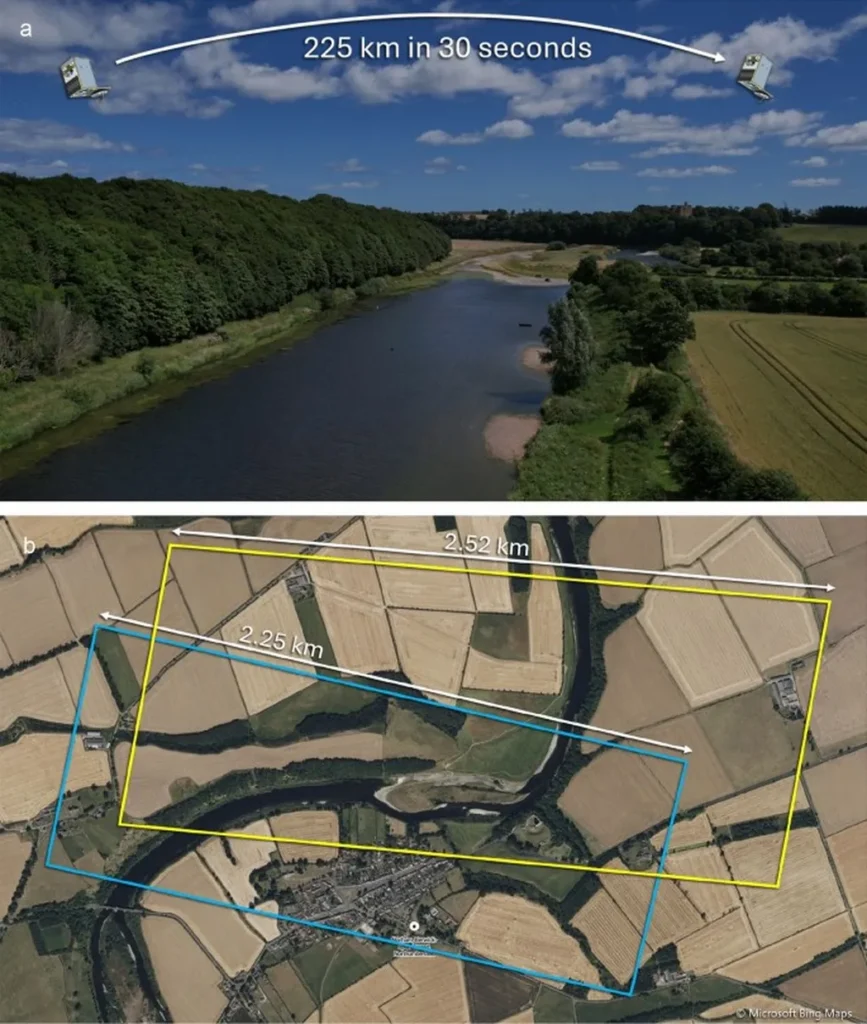
Enter the 21st century. Remote sensing and artificial intelligence are turning river discharge measurement into a task that can be tackled from space—or even from the safety of a lab. González-Vergara’s review highlights a quiet revolution: methods that use images from satellites, drones, or even riverbanks, combined with machine learning models like Convolutional Neural Networks (CNNs) and Long Short-Term Memory networks (LSTMs), to estimate discharge without ever wetting a boot.
The implications are vast, particularly for the energy sector. Hydropower plants, which rely on precise river flow data to optimize power generation and manage reservoirs, could benefit from lower-cost, real-time monitoring. “Imagine being able to adjust a dam’s operations on the fly because you’re getting live data from a satellite instead of waiting for a field team to report back,” says González-Vergara. “That’s not just efficiency—it’s a game-changer for energy reliability and sustainability.”
Yet the transition isn’t seamless. The review underscores a critical hurdle: these AI-driven methods are highly dependent on site-specific calibration. A model trained on the Colorado River might struggle in the Mekong. “The technology is advancing rapidly, but we’re not quite at the point where you can plug in a universal model and expect it to work everywhere,” González-Vergara notes. “We need more cross-basin validation and better ways to quantify uncertainty.”
For industries watching the horizon, this research signals a shift from reactive to proactive water management. The energy sector, in particular, stands to gain from more agile, cost-effective hydrological data—whether for siting new facilities, managing cooling water in thermal plants, or mitigating risks in flood-prone regions. The challenge now is bridging the gap between promising proof-of-concepts and scalable, real-world applications.
As González-Vergara and his colleagues push the boundaries of what’s possible, one thing is clear: the future of river discharge measurement won’t be defined by a single tool, but by a fusion of old and new. And in a world where water is both a lifeline and a liability, that fusion could be the key to unlocking smarter, more resilient systems. Published in *Earth*, their work is a call to action—not just for scientists, but for policymakers, engineers, and industry leaders who shape the landscapes we depend on.