
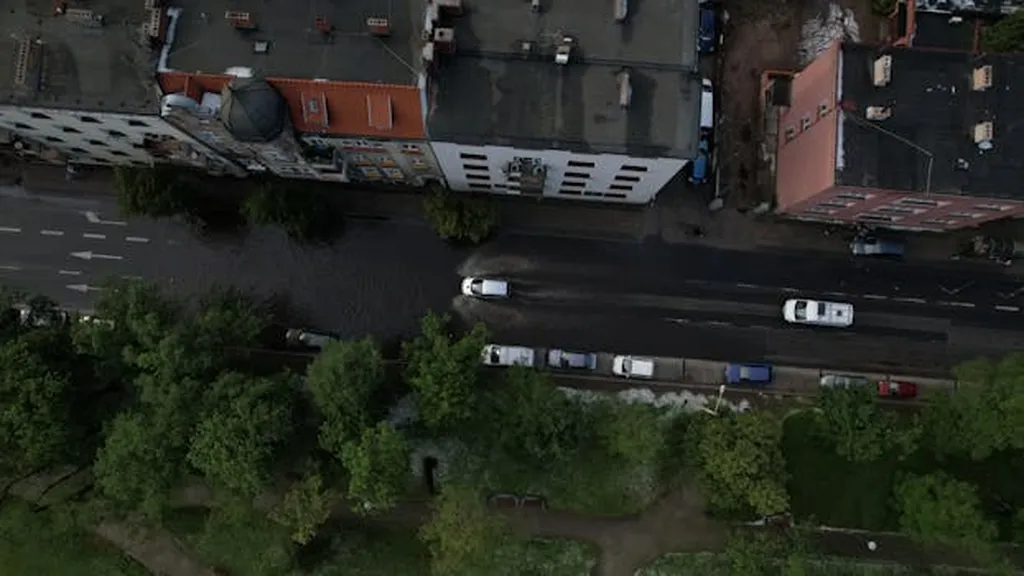
The stormwater management systems that protect cities from flooding and pollution are on the verge of a quiet revolution—one driven not by concrete and steel alone, but by lines of code and the silent hum of servers. In a new study published in *Discover Applied Sciences*, Musfiqur Rahman, a researcher in the Department of Civil and Environmental Engineering at Villanova University, argues that artificial intelligence (AI) could fundamentally shift how we design, operate, and govern urban water systems. The implications aren’t just technical; they ripple across industries, especially energy, where smarter stormwater management could reduce operational costs, improve resilience, and unlock new efficiencies.
Rahman and his team categorize AI’s role in stormwater management into three key areas: Observation, Analysis, and Governance. In the Observation domain, AI-powered sensors and drones can continuously monitor rainfall, water levels, and pollutant concentrations in real time—generating data streams that were previously unimaginable in granularity and scale. “Traditional monitoring systems often provide snapshots in time,” Rahman notes. “With AI, we’re moving toward a pulse—continuous, adaptive, and responsive.” For energy utilities managing critical infrastructure, this means early detection of flooding risks to substations or pipeline routes, allowing preventive action before costly damage occurs.
In the Analysis domain, AI models can simulate how stormwater systems will behave under future climate scenarios, identify bottlenecks in drainage networks, and even optimize the placement of green infrastructure like permeable pavements or retention ponds. “We’re not just predicting the weather,” Rahman explains. “We’re predicting the impact of that weather on our cities—and doing it fast enough to act.” For energy companies, this level of foresight could inform siting decisions for new facilities, reduce insurance premiums, and support compliance with environmental regulations that increasingly penalize runoff pollution.
Where AI meets policy, Rahman highlights the Governance frontier. AI-driven dashboards could help city planners and utility managers visualize trade-offs between flood risk, water quality, and infrastructure investment—supporting decisions that balance resilience with equity. “Technology alone won’t fix stormwater challenges,” he says. “But when paired with transparent, inclusive governance, it can ensure that solutions don’t leave communities behind.”
The road to AI integration isn’t without obstacles. Data quality, model accuracy, and scalability remain hurdles, and many agencies lack the institutional frameworks to adopt adaptive AI systems. Rahman advocates for hybrid models that combine physics-based simulations with machine learning, standardized data protocols, and governance frameworks that prioritize fairness and accountability. “We need to build systems that are not just smart, but also trustworthy,” he emphasizes.
For the energy sector, the commercial stakes are clear: smarter stormwater management means lower operational risks, reduced downtime, and greater alignment with sustainability goals. As AI tools mature and data becomes more accessible, utilities could see a 15–25% reduction in flood-related asset damage and maintenance costs within a decade, according to industry estimates cited in the study. That translates to millions in savings—and a competitive edge in an era where resilience is a market differentiator.
As Rahman’s work suggests, the future of stormwater management won’t be built overnight. But with AI as a co-pilot, cities—and the industries that power them—can navigate storms not with guesswork, but with precision. Published in *Discover Applied Sciences*—known in Chinese as *探索应用科学*—the research serves as both a roadmap and a call to action: to rethink infrastructure not as static, but as a living system, constantly learning and adapting.