
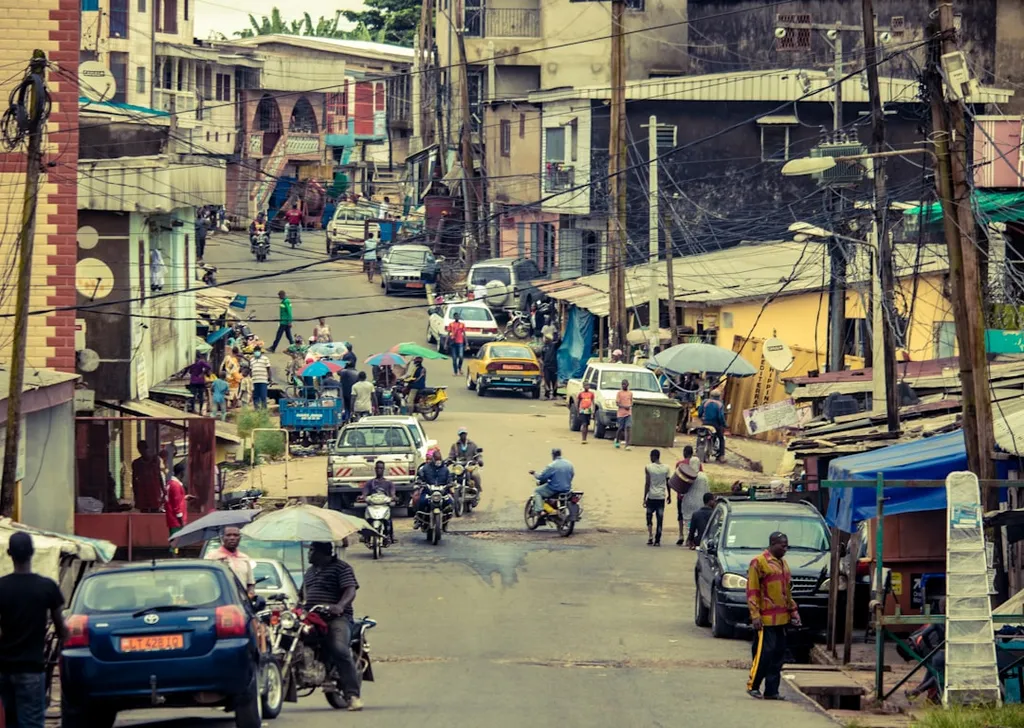
In the bustling port city of Douala, Cameroon’s economic heartbeat, a silent crisis is unfolding. Over the past three decades, the city’s lifeline—its wetlands—has been shrinking at an alarming rate, threatening not just the environment but the very resilience of urban life. A new study by Roussel Lalande Teguia Kenmegne from Laval University in Quebec, published in the *Journal of Urban Management* (translated: *Revue de gestion urbaine*), exposes the stark reality: mangrove areas in Douala IV have dwindled from 1,591 hectares in 1990 to just 541 hectares in 2024. That’s a loss of nearly two-thirds of these critical ecosystems in less than 35 years.
The numbers tell a grim story. Between 1990 and 2012, the annual rate of wetland loss hovered around 2.40%, a figure that barely improved in the following decade, at 2.32%. Despite the adoption of a municipal land-use plan in 2012, degradation has continued unabated. For the 3.5 million residents of Douala, this isn’t just an ecological issue—it’s an economic and social one. Wetlands act as natural sponges, absorbing floodwaters and purifying water supplies, but their decline is leaving the city increasingly vulnerable.
Kenmegne’s research, which blends GIS mapping, field observations, and interviews with 27 key stakeholders, points to governance as the core issue. “Overlapping institutional roles and weak enforcement of environmental regulations are major drivers of wetland encroachment,” he explains. The study highlights how unchecked industrial expansion and unregulated urbanization are eating away at these vital buffers, leaving communities exposed to flooding and water scarcity.
For industries like energy, the stakes are high. Douala’s wetlands are not just ecological assets; they’re economic ones. The port, a lifeline for Cameroon’s oil and gas sector, relies on stable coastal conditions to function efficiently. Flooding disrupts logistics, damages infrastructure, and increases maintenance costs—all of which ripple through supply chains and energy markets. Companies operating in the region must now factor in the long-term risks of wetland degradation when planning expansions or supply routes.
The study offers a roadmap for change. Kenmegne advocates for revising zoning laws, strengthening enforcement, and adopting participatory planning that includes local communities. “Integrating wetlands into urban planning isn’t just about conservation—it’s about building resilience,” he says. For policymakers and urban managers, the message is clear: the time to act is now.
What does this mean for the future? If Douala’s wetlands continue to vanish, the city’s ability to withstand climate shocks will weaken, driving up costs for businesses and governments alike. But the study also holds a lesson for other coastal cities grappling with similar challenges. By prioritizing wetland preservation, urban planners can safeguard not just the environment, but the economic stability that depends on it. The question isn’t whether change is needed—it’s whether cities will act before it’s too late.