
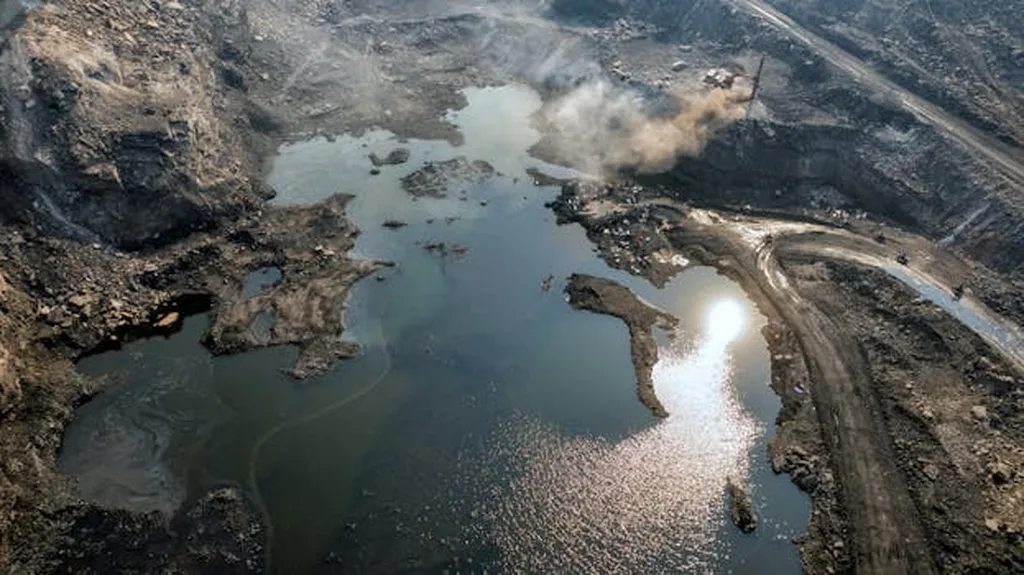
Groundwater beneath Eslamshahr, a fast-growing suburb southwest of Tehran, is carrying a hidden burden: measurable levels of cadmium, chromium, lead, nickel and zinc. A year-long campaign led by Amir Zahraei Salehi at the University of Tehran’s Department of Environmental Engineering has just mapped how those metals move through the aquifer and what they could mean for the 400,000 residents who rely on private wells and municipal boreholes.
The study is the first to break the risk into two distinct pathways—drinking the water and simple dermal contact—and to compare children against adults. For non-cancer hazards, the numbers look reassuring. Hazard indices for both age groups sit well below the safety threshold of one (0.58 for children, 0.30 for adults), suggesting that short-term health effects such as kidney stress or neurological impairment are unlikely under current exposure levels. “We were relieved to see that the aggregate non-carcinogenic risk is still within acceptable limits,” Zahraei Salehi notes, “but that relief ends when we turn to the cancer lens.”
That lens reveals a different picture. Lifetime cancer risk calculated for chromium (6.150 × 10⁻⁵) and lead (3.131 × 10⁻⁴) via ingestion and skin absorption now translates into an estimated 205 additional cancer cases per year across the district. The authors stress these are probabilistic estimates based on USEPA models, yet the order of magnitude is hard to ignore for planners and utilities alike.
What makes the findings commercially relevant is timing. Eslamshahr is morphing from a patchwork of small farms and workshops into a logistics hub and light-manufacturing corridor. New industrial parks and data-center campuses are eyeing the same aquifer for process water and cooling towers. “If groundwater treatment is not scaled up in lock-step with industrial growth,” warns Zahraei Salehi, “the carcinogenic load could climb faster than the dilution capacity of the aquifer.” Reverse-osmosis plants, ion-exchange units and advanced oxidation systems that can strip heavy metals to sub-parts-per-billion levels suddenly look like pre-requisites rather than optional upgrades.
For energy investors, the takeaway is two-fold. First, water-intensive facilities—power substations, battery gigafactories, hydrogen electrolysers—will face stricter discharge permits and higher pre-treatment capex before they can secure environmental approvals. Second, the study flags chromium and lead as the two metals whose concentrations most urgently need to be reduced, giving technology vendors a clear market signal: membranes and adsorbents optimized for these specific ions will see accelerated adoption curves.
Published in *Environmental Science* (the Persian journal *محیط شناسی*), the paper quietly joins a growing body of evidence that treats groundwater not as an infinite sink but as a finite resource whose quality is the ultimate constraint on regional growth. The next phase of work, already planned, will couple high-resolution isotope tracing with real-time sensor networks to turn these risk maps into live control systems—letting Eslamshahr treat its aquifer as both a vital asset and a shared liability.