
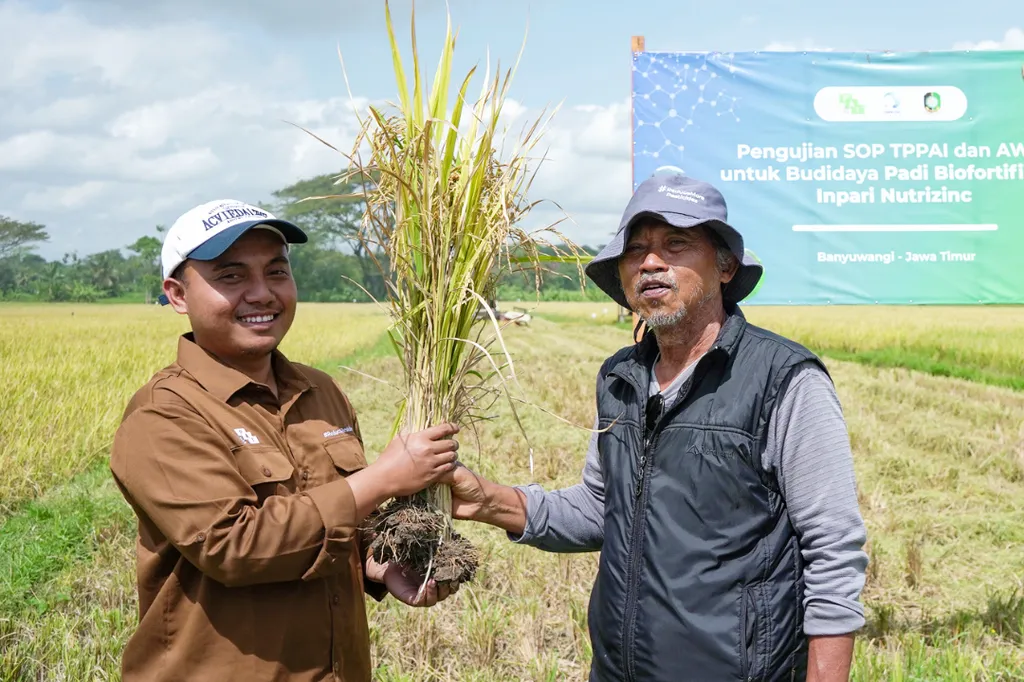
In the rolling hills of East Java, Indonesia, a quiet revolution is taking shape—not in gleaming laboratories or corporate boardrooms, but in the muddy furrows of smallholder farms. Here, the Tawangargo Smart-Eco Farming Village (TAMENG) program, led by PT Petrokimia Gresik and supported by corporate social responsibility initiatives, is proving that decarbonization doesn’t require reinventing the wheel. Instead, it’s about stitching together existing practices into a system that works for farmers, the climate, and the energy sector alike.
Ainuddin Ilham, a researcher from Universitas Diponegoro’s Department of Business Administration, has been tracking this transformation. His findings, published in *E3S Web of Conferences* (translated from *E3S Web des Conférences*, a platform for environmental, energy, and sustainability sciences), reveal how circular agriculture and precision irrigation are not just reducing emissions but also cutting costs and boosting resilience. “This isn’t about high-tech silver bullets,” Ilham explains. “It’s about making the most of what farmers already have—like turning crop waste into fertilizer and feed, or using water more wisely to save energy and labor.”
The numbers are striking. Since 2022, the TAMENG program has processed over 1,000 tons of horticultural residues annually, converting them into liquid organic fertilizer (POC) and livestock feed concentrate (wafer). The environmental payoff? An estimated 555 metric tons of CO₂-equivalent emissions avoided each year—mostly by preventing unmanaged decomposition of waste and reducing the need for synthetic inputs. For the energy sector, that’s a tangible reduction in upstream emissions linked to fertilizer production and water pumping.
But the real innovation lies in the irrigation pilots. By adopting drip systems and growth-stage scheduling, farmers have slashed water use by up to 65%. For a region where water scarcity and energy-intensive pumping are persistent challenges, this isn’t just an environmental win—it’s a financial one. Less water means less time spent irrigating, lower electricity bills for pumps, and fewer disruptions during dry spells. “When you cut water use by two-thirds, you’re not just saving water,” Ilham notes. “You’re saving the energy that would have gone into moving it.”
Behind these results is a governance model that’s just as critical as the technology. Ilham highlights the role of Agronova Vision, a cross-group platform that connects farmers, researchers, and agribusinesses, and the Resource Center (P4S Ngudi Kaweruh), which serves as a hub for training, quality control, and scaling up. “This isn’t a top-down project,” he says. “It’s a living lab where farmers experiment, adapt, and lead. The center ensures that the practices stick—because they’re not imposed; they’re owned.”
For the energy sector, the implications are clear. As utilities and policymakers seek ways to decarbonize without stifling economic growth, programs like TAMENG offer a blueprint. They show how small-scale, community-driven solutions can aggregate into meaningful emissions reductions while also delivering co-benefits like energy efficiency and water conservation. The challenge now is replication—taking these lessons beyond East Java and adapting them to other regions where smallholder agriculture dominates.
Ilham’s work suggests that the future of sustainable farming may not lie in waiting for breakthrough technologies, but in refining the systems we already have. For industries grappling with decarbonization targets, that’s a message worth listening to. The farms of tomorrow might not look dramatically different from today’s—but the way they operate could change the game entirely.