
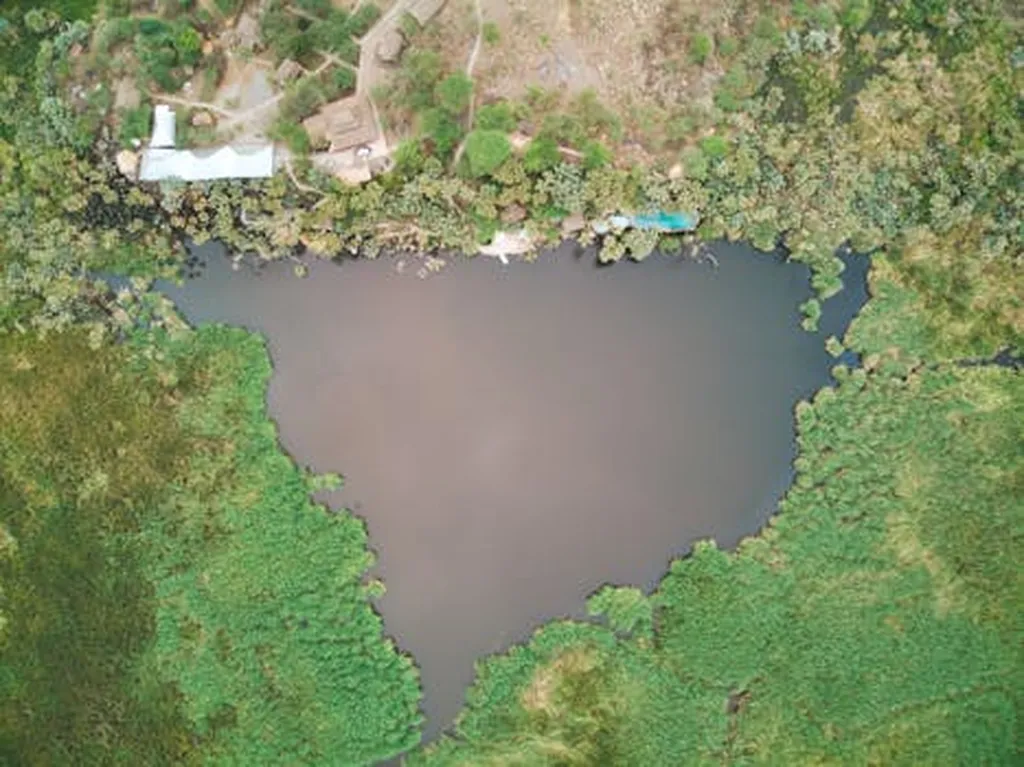
The Lake Tana Basin in Ethiopia’s highlands is a vital water source for agriculture and hydropower, yet reliable data on evapotranspiration (ET)—a key factor in water management—has been scarce. Daniel W. Mebrie, a researcher at Woldia University’s Water Resources and Irrigation Engineering Department, has tackled this challenge in a new study published in the *Journal of Hydrology: Regional Studies* (የውሃ ንብረት የአካባቢ ምንባብ ዜናፎች), evaluating six remote-sensing and reanalysis ET products to guide irrigation and water planning.
ET measures how much water evaporates from soil and transpires from plants, directly impacting irrigation efficiency and hydropower generation. With limited ground-based weather stations in the basin, Mebrie and his team turned to satellite and model-based datasets—MODIS, WaPOR, ERA5-Ag, ERA5-Land, CFSv2, and TerraClimate—to fill the data gap. Using machine learning in Google Earth Engine, they downscaled these products to 500-meter resolution, ensuring spatial consistency for practical use.
The results reveal clear winners and laggards. “ERA5-Ag emerged as the most reliable for daily and monthly water management,” Mebrie notes, “with high correlation to ground-truth data and minimal bias.” This makes it a strong candidate for real-time irrigation scheduling and reservoir operations—critical for energy producers relying on consistent water flow.
TerraClimate, while slightly less accurate, captured spatial variability better, particularly its strong inverse relationship with elevation. “This helps us understand how water availability shifts across the basin,” Mebrie explains, “which is essential for long-term climate adaptation in hydropower planning.”
Not all products fared well. WaPOR consistently overestimated ET, MODIS showed large positive bias, and reanalysis models like ERA5-Land and CFSv2 struggled with spatial consistency. These inconsistencies could lead to misinformed water allocation decisions, potentially straining energy infrastructure during peak demand.
For the energy sector, this research signals a shift toward data-driven water management. Hydropower operators could integrate ERA5-Ag into forecasting models to optimize turbine efficiency and reduce spill risks during wet seasons. Meanwhile, TerraClimate’s spatial insights could inform dam siting and watershed conservation strategies.
As climate variability intensifies, the need for accurate ET data grows. Mebrie’s work suggests that combining high-resolution models with ground validation could redefine water-resource planning—not just in Ethiopia, but in data-sparse regions worldwide. The next step? Scaling these methods to support cross-border energy projects and climate resilience initiatives across the Nile Basin.
For now, the message is clear: better ET data isn’t just academic—it’s a lever for smarter, more sustainable energy and water systems.