
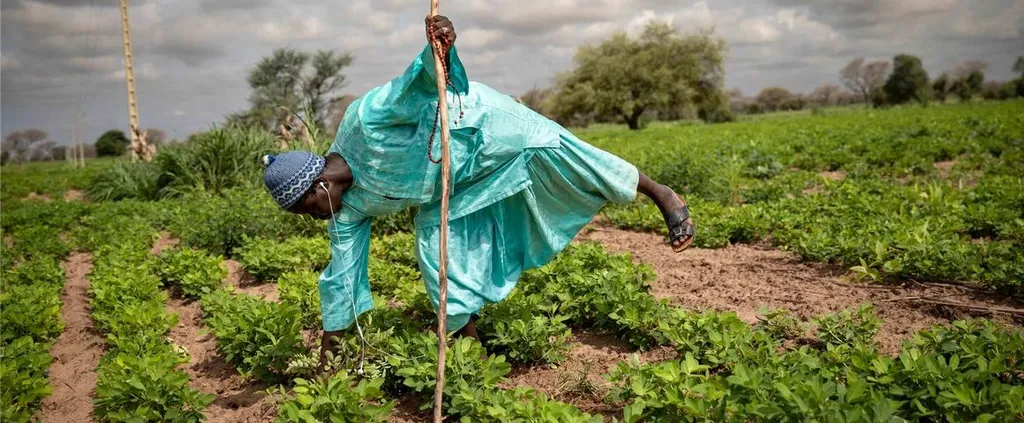
For decades, Eastern Africa’s farmers have wrestled with a paradox: their soils are hungry, yet their livestock are starving. The region’s smallholders depend on both to survive, but synthetic fertilizers—costly and carbon-intensive—offer only a partial fix. Now, a new review by Alemu Gashe Desta from Debre Markos University suggests a natural ally may lie in nitrogen-fixing forage legumes, plants that enrich the soil while feeding animals, all without the environmental toll of industrial inputs.
Desta’s synthesis, published in *Discover Environment* (formerly *Discover Environment*, translated from *Discover Environment*), pulls together decades of scattered research into a regional roadmap. It reveals that certain legumes don’t just survive in Eastern Africa’s varied climates—they thrive, pumping nitrogen back into the soil at rates that rival or exceed synthetic fertilizers. Species like *Desmodium*, a hardy ground cover, can fix up to 897 kg of nitrogen per hectare annually under ideal conditions, while multipurpose trees such as *Leucaena leucocephala* deliver 50–587 kg N/ha/year, depending on site.
“These legumes are not just soil healers,” says Desta. “They are feed factories. Their protein content—ranging from 12% to 25%—can directly improve milk yields, weight gain, and feed efficiency in livestock.” For a region where feed shortages and soil degradation are intertwined crises, that dual benefit is transformative.
But the implications stretch beyond the farm gate. As global pressure mounts to reduce synthetic nitrogen use—linked to greenhouse gas emissions and groundwater pollution—the findings offer a scalable alternative. Energy-intensive fertilizer production accounts for 1–2% of global carbon emissions. By integrating nitrogen-fixing legumes into crop-livestock systems, Eastern Africa could cut reliance on imported inputs, stabilize yields, and reduce the carbon footprint of agriculture—all while boosting rural incomes.
Yet adoption remains uneven. Weak seed systems, labor constraints, and limited farmer awareness slow progress. Desta calls for stronger seed supply chains, targeted training on inoculation and management, and policies that embed legumes into climate-smart agriculture. “We’re not just talking about better grass,” he says. “We’re talking about a system that feeds the soil, feeds the animals, and feeds the future—without burning fossil fuels to do it.”
For the energy sector, this research signals a quiet but profound shift. As fertilizer prices fluctuate and carbon markets tighten, the demand for biological nitrogen solutions is poised to rise. Eastern Africa’s farmers may soon find themselves at the vanguard of a low-carbon livestock revolution—one rooted not in pipelines or power plants, but in the humble, nitrogen-fixing root.