
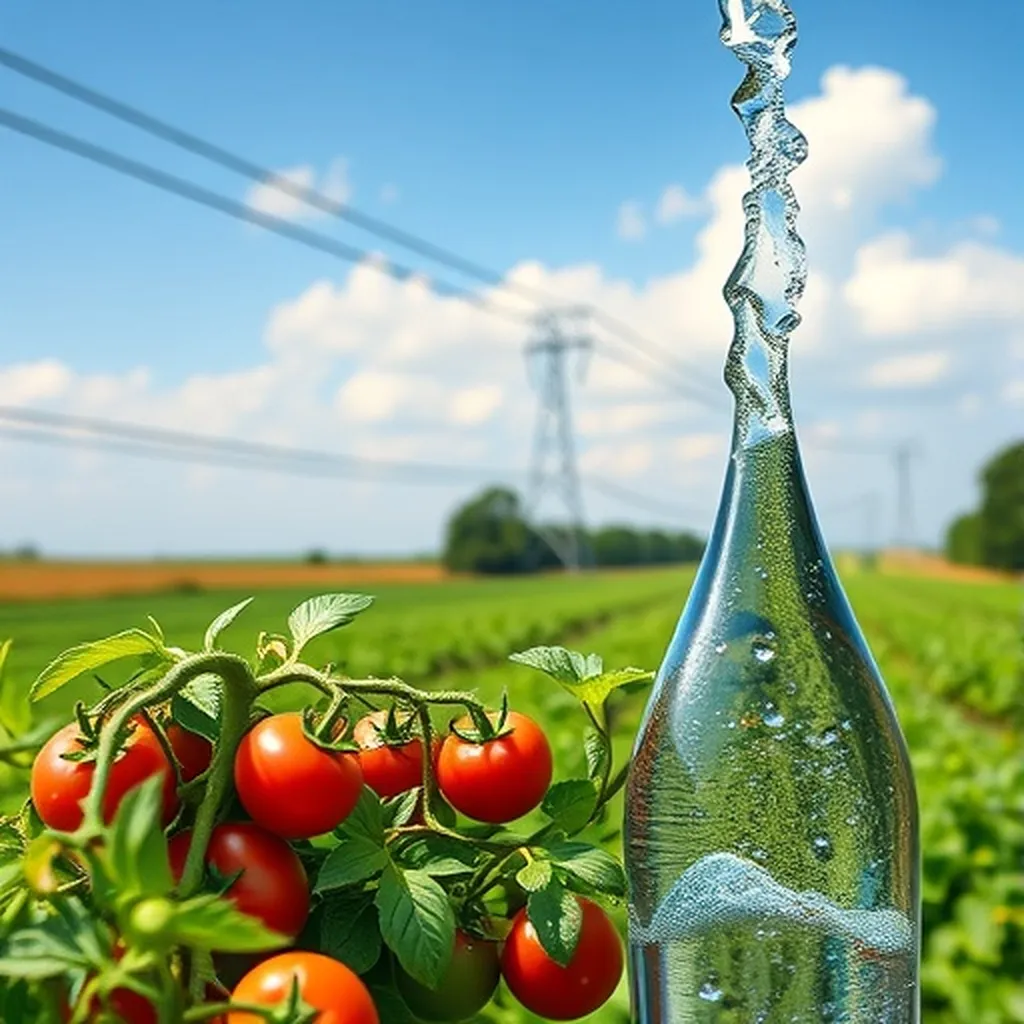
The study out of Spain suggests that agrivoltaics is moving from a theoretical win-win into a measurable one, at least for tomato growers in Mediterranean climates. Researchers at the University of Seville and the Polytechnic University of Madrid ran side-by-side trials that pitted fully irrigated tomatoes under full sun against the same varieties grown under solar panels with 50 % less water. The control block produced the highest kilos per hectare, but the panelled plants converted every litre of irrigation into roughly 20 % more marketable fruit, according to the Land Equivalent Ratio the team devised. “We found that the water productivity—the kilograms of tomato per cubic metre—was significantly higher when the plants were shaded,” said one of the lead authors. “That tells us the panels are doing two jobs at once: generating electrons and lowering the crop’s transpiration demand.”
Not all crops respond the same way. The paper notes that tomatoes can flag under heavy shading, while olives, leafy greens and certain berries often yield more when dappled sunlight replaces direct midday rays. The same effect extends to labour and livestock: workers report lower heat stress in shaded fields, and dairy goats in a pilot in southern Spain gained weight faster when pastures were partially covered. The secondary revenue stream is the obvious financial lever—Spanish cooperatives are already contracting agrivoltaic leases at €1,200–1,500 per hectare per year, enough to offset the 10–15 % tomato yield loss observed in the trials when water is cut.
What the Madrid group’s Land Equivalent Ratio of 1.3–1.4 really measures is land-use efficiency, not absolute production. The metric combines kilowatt-hours of PV electricity with kilograms of tomato and litres of irrigation water into a single score. Any LER above 1 means the combined system beats monoculture; below 1 and the panels are simply stealing sunlight. The Spanish researchers ran sensitivity tests on water stress and found that yields fell only 20 % when irrigation was halved, suggesting there is room to fine-tune scheduling with soil-moisture probes or drone-mounted thermal cameras. “We could get that 20 % back if we irrigate at the exact moment the plant’s stomata are opening,” another co-author noted. “That is where the next tranche of efficiency gains lies.”
Drought risk is reshaping irrigation economics across southern Europe and the western United States. Traditional flood or pivot systems are being choked by water-rights curtailments and energy tariffs; agrivoltaics offers a hedge: the same land that grows food now also generates power, reducing the farm’s carbon footprint while locking in a second income. The study stops short of a full economic model—panel capital costs, inverter replacements, and grid-connection fees are site-specific—but the direction is clear. If policy makers allow net-metering or feed-in tariffs for small-scale agrivoltaic arrays, the internal rate of return for a 500 kW array on one hectare jumps from roughly 8 % to double digits once tomato revenues are added.
The human dimension is just as telling. In La Mancha, tomato farmers who leased rooftops to utilities now lease fields to agrivoltaic developers, keeping family plots intact while diversifying risk. Their children, who might once have left for city jobs, are returning as data technicians, watching soil-moisture dashboards and adjusting drip emitters from their phones. The panels are not just hardware; they are an employment bridge between the agrarian past and a decarbonised future.