
Kunyu Cai from Southwest University in Chongqing has just published a groundbreaking review in *Environmental Chemistry and Safety* that could reshape how industries approach wastewater treatment—especially those grappling with energy-intensive oxidation processes. The study dives deep into Fenton and Fenton-like systems, long hailed as workhorses in advanced oxidation for breaking down stubborn organic pollutants, but now under scrutiny for their appetite for hydrogen peroxide—a costly and energy-demanding reagent.
Cai and his team argue that the future doesn’t lie in brute-force radical chemistry, but in smarter, more selective oxidation pathways. “We’re not just trying to oxidize more—we’re trying to oxidize smarter,” Cai explains. Instead of relying solely on fleeting hydroxyl radicals, the research highlights how longer-lived, more selective reactive species—like singlet oxygen or high-valent iron complexes—can achieve the same pollutant destruction with significantly less oxidant. That means fewer chemicals, lower energy inputs, and smaller carbon footprints.
For energy-heavy sectors such as thermal power plants, refineries, or chemical manufacturers, this is more than academic. Wastewater streams often contain complex organic contaminants that demand aggressive treatment—traditionally met with high doses of Fenton’s reagent. But with oxidant costs rising and sustainability mandates tightening, the pressure is on to cut chemical use without sacrificing performance. Cai’s review points to a way forward: catalyst design that steers reactions toward non-radical pathways, reducing peroxide consumption by up to 50% in some scenarios, based on preliminary studies cited in the paper.
One promising angle is “multiscale catalyst regulation”—tuning materials at the atomic, particle, and reactor levels to favor selective oxidation. For instance, iron-based catalysts engineered to stabilize high-valent Fe(IV) species could enable targeted degradation of specific pollutants like phenol or pharmaceutical residues, minimizing side reactions that gobble up oxidants unnecessarily.
The implications ripple across the energy sector. Less peroxide means lower shipping emissions, reduced storage risks, and smaller on-site treatment footprints—critical for plants operating in sensitive or remote areas. It also opens doors to integrating these systems with renewable energy sources, since the milder reaction conditions may align better with intermittent power supplies.
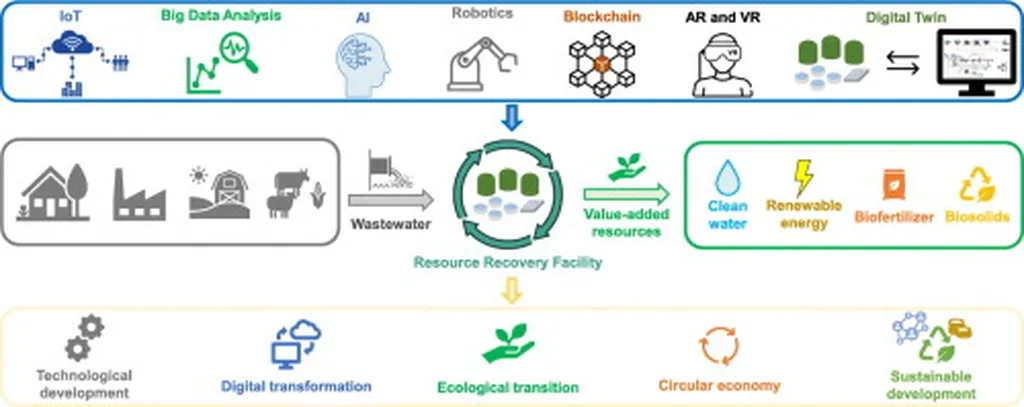
Yet challenges remain. Scaling up non-radical systems for real-world wastewater—with its shifting pH, salinity, and pollutant mix—demands robust process control. Cai acknowledges this: “The lab is predictable. Real wastewater is chaotic.” That’s why the review calls for predictive modeling and adaptive catalyst design, pairing AI-driven optimization with traditional engineering.
As industries eye net-zero pathways, innovations that cut chemical and energy use in wastewater treatment are no longer optional—they’re strategic. And with this review, Cai isn’t just predicting the future; he’s laying the theoretical groundwork for it. The next step? Moving from bench to pilot, and proving that ultra-low oxidant systems aren’t just greener—they’re commercially viable.