
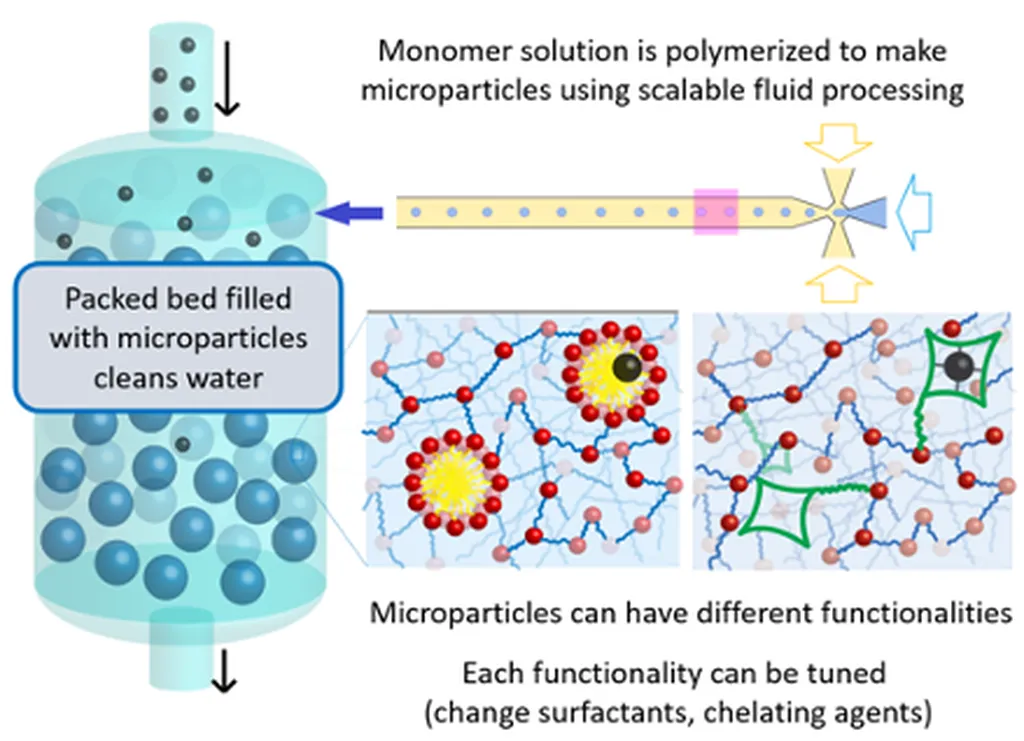
A breakthrough in wastewater treatment could soon make industrial water purification more efficient and less costly, thanks to research led by Chunhong Zhou at China Three Gorges University. In a study published in *Environmental Chemistry and Safety* (环境化学与安全), Zhou and his team have demonstrated that nickel oxide (NiO) microparticles can effectively activate peroxydisulfate (PDS) to break down bisphenol A (BPA)—a common endocrine-disrupting chemical found in plastics and wastewater from pharmaceutical and chemical plants.
What makes this discovery particularly compelling is not just its efficiency—achieving a 93.2% degradation rate and 82.96% mineralization of BPA under optimized conditions—but the robustness of the system. According to the research, the NiO/PDS system shows strong resistance to interference from common ions, pH fluctuations, and organic matter like humic acid. This resilience is critical for real-world applications, especially in treating complex industrial effluents.
“Our results indicate that the NiO/PDS system doesn’t just degrade pollutants—it does so selectively and sustainably, even in the presence of competing substances,” Zhou said. This selectivity is a game-changer for industries like pharmaceuticals and petrochemicals, where wastewater often contains a mix of contaminants.
The mechanism behind this performance lies in the unique properties of NiO microparticles. The team found that the material’s aggregated microparticle structure, mixed Ni²⁺/Ni³⁺ oxidation states, and abundant surface oxygen vacancies work together to efficiently activate PDS. Unlike traditional advanced oxidation processes (AOPs) that rely heavily on radical-based degradation—often energy-intensive and prone to scavenging—the NiO/PDS system leverages both radical and non-radical pathways, with the latter playing the dominant role. This dual approach enhances stability and reduces the need for harsh operating conditions.
Perhaps most significantly, the system was tested on real pharmaceutical wastewater, not just lab-grade solutions. The results confirmed its practical viability, suggesting that NiO-based catalysts could soon move from the lab bench to wastewater treatment plants. An ecological risk assessment using the ECOSAR model further showed that the toxicity of BPA solutions dropped substantially after treatment, easing concerns about downstream environmental impact.
For energy-intensive industries—where water reuse and effluent quality are increasingly tied to regulatory compliance and operational costs—the implications are substantial. Implementing such catalytic systems could reduce reliance on energy-heavy treatments like ozonation or UV/H₂O₂, cutting both carbon footprints and operational expenses.
“This isn’t just about meeting discharge standards,” Zhou noted. “It’s about enabling industries to close the loop on water use—turning wastewater into a resource rather than a liability.”
As global regulations tighten and water scarcity intensifies, innovations like NiO-activated PDS systems could redefine how industries approach purification. The research, published in *Environmental Chemistry and Safety* (环境化学与安全), points to a future where advanced catalysis becomes a cornerstone of sustainable water management in high-impact sectors.