
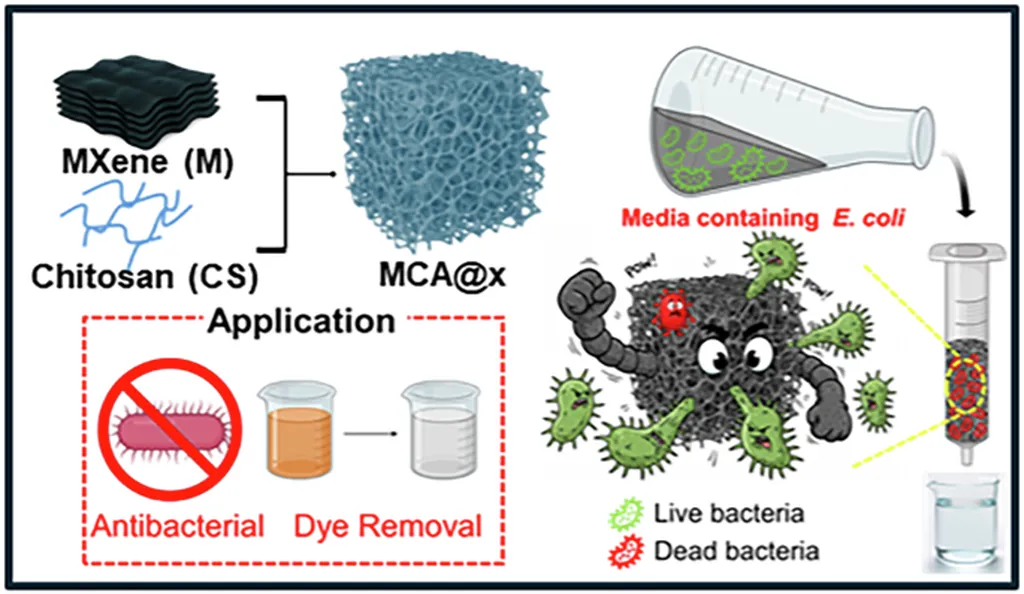
In a quiet corner of Borre, Norway, where the fjords meet the North Sea, a team led by Dr. Narasimharao Kitchamsetti at the University of South-Eastern Norway is quietly rewriting the rules of what’s possible in materials science. Their focus? MXene-based aerogels—materials so light they could float on a breeze, yet so conductive they might just power the next generation of energy solutions. This isn’t just academic curiosity; it’s a glimpse into a future where water treatment, energy storage, and even environmental cleanup could be faster, cheaper, and far more efficient.
MXenes, a class of two-dimensional materials discovered just over a decade ago, have already shown promise in energy storage and electronics. But when paired with aerogels—a foam-like structure where air makes up over 99% of the volume—they become something even more extraordinary. “The magic happens at the intersection of structure and function,” Kitchamsetti explains. “By controlling the pore architecture and surface chemistry, we can tailor these materials for specific tasks—whether it’s desalinating seawater with solar energy or capturing pollutants with unprecedented precision.”
The commercial implications are hard to ignore. For the energy sector, these aerogels could mean lighter, more efficient batteries and supercapacitors that charge in minutes rather than hours. Imagine electric vehicles that weigh less and travel farther, or grid-scale storage systems that store excess renewable energy without losing capacity over time. “Right now, we’re trading off conductivity for durability,” Kitchamsetti notes. “But if we can stabilize these materials without sacrificing performance, we’re looking at a paradigm shift in how we store and distribute power.”
The environmental angle is equally compelling. MXene aerogels could revolutionize water purification by using sunlight to distill seawater or break down contaminants at a molecular level. In regions where clean water is scarce, this could be a game-changer. Meanwhile, their ability to shield against electromagnetic interference could protect sensitive electronics in everything from medical devices to aerospace systems.
Yet, as with any breakthrough, the road to real-world application is fraught with challenges. These materials are sensitive to moisture and oxygen, and scaling up production without compromising quality remains a hurdle. “We’re not just making lab curiosities,” Kitchamsetti cautions. “We need to think about lifecycle costs, recyclability, and how these materials behave in the wild.”
Still, the momentum is undeniable. Published in the journal *Small Science* (or *Kleine Wissenschaft* in German), this review serves as both a roadmap and a call to action for researchers and industry alike. As AI-driven materials design and greener synthesis methods enter the fray, the next decade could see MXene aerogels move from university labs to factory floors—and into the hands of engineers, environmentalists, and energy innovators worldwide.
For now, the question isn’t whether these materials will change the game, but how soon—and who will be first to harness their potential.