
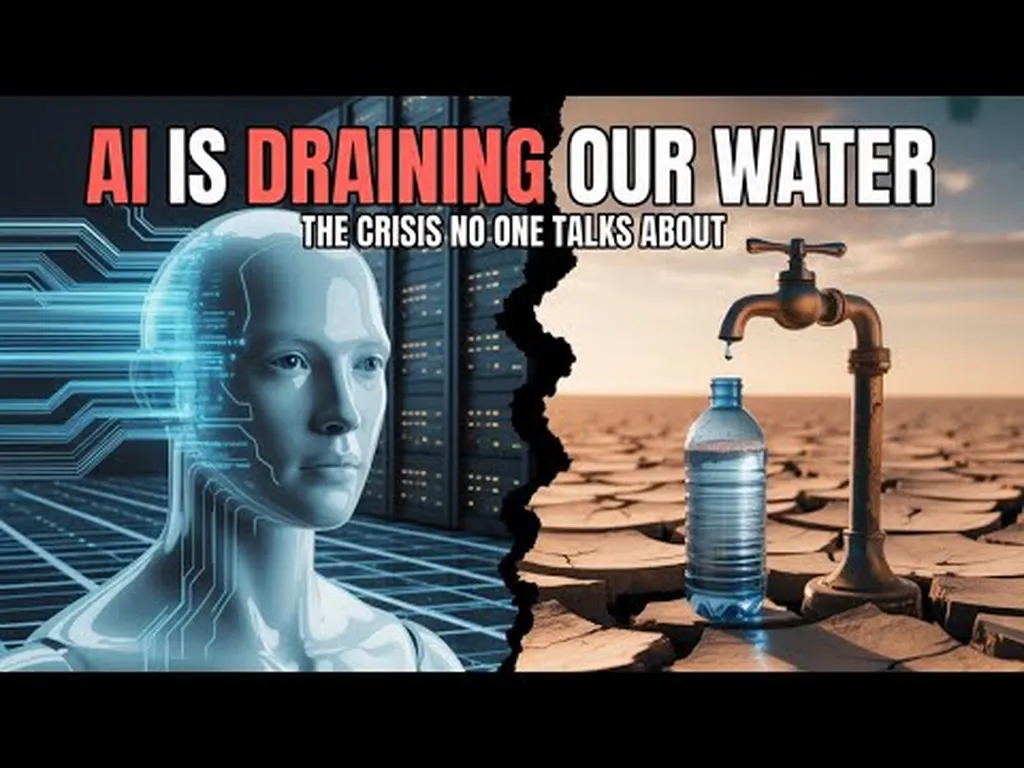
In the arid landscapes of the Middle East, where water scarcity isn’t just a challenge but a daily reality, a new wave of innovation is quietly reshaping how societies manage their most precious resource. Marwan Al-Raeei, a researcher affiliated with Damascus University and other institutions, is at the forefront of this revolution, exploring how artificial intelligence (AI) could transform water infrastructure from a reactive system into a predictive, resilient network. His work, published in *Next Sustainability* (trans. *Next Sustainability*), isn’t just about theory—it’s about tangible solutions that could redefine water management for industries, governments, and communities alike.
Al-Raeei’s research delves into how AI-driven systems can monitor water quality in real time, predict contamination before it spreads, and even forecast floods with unprecedented accuracy. “Traditional water management often reacts to problems after they occur,” Al-Raeei notes. “AI changes that by turning data into foresight.” For industries like energy, where water is a critical input—whether for cooling power plants, fracking, or biofuel production—this shift could mean fewer disruptions, lower costs, and a smaller environmental footprint.
One of the most compelling applications lies in flood prediction. By integrating AI with IoT sensors and deep learning models, Al-Raeei’s team demonstrates how ensemble and neural networks can process vast streams of meteorological and hydrological data to provide early warnings. For energy companies operating in flood-prone regions, this isn’t just about safety—it’s about protecting infrastructure worth billions. A single unplanned outage at a refinery or offshore platform can cost millions per day, making predictive resilience a commercial imperative.
The energy sector’s reliance on water also extends to agriculture, where irrigation accounts for nearly 70% of global freshwater withdrawals. Al-Raeei highlights how AI-driven precision irrigation, combining soil moisture sensors with weather forecasts, could slash water use in biofuel crop cultivation or cooling tower operations. “We’re talking about cutting waste without sacrificing productivity,” he explains. “That’s a game-changer for industries where water efficiency directly impacts the bottom line.”
Yet, challenges remain. Data quality, model interpretability, and the integration of legacy systems into AI frameworks are hurdles that can’t be ignored. Al-Raeei acknowledges these gaps but sees them as opportunities. “The future isn’t just about smarter algorithms—it’s about smarter ecosystems,” he says. “We need sensors that are more robust, models that are more transparent, and policies that encourage collaboration.”
For industries watching these developments, the message is clear: the water-energy nexus is evolving, and AI is the catalyst. Whether it’s reducing downtime in power plants, optimizing desalination processes, or ensuring sustainable fuel production, the commercial implications are vast. As Al-Raeei’s work suggests, the next decade of water management won’t just be about conservation—it’ll be about intelligence.