
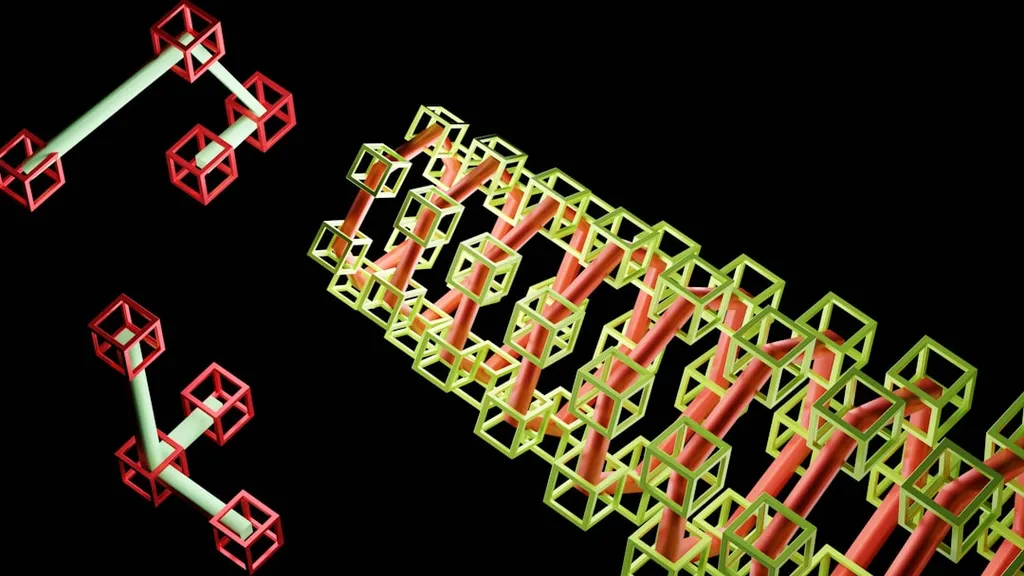
Researchers from Firat University have developed a groundbreaking model that could redefine how industries manage heat transfer in complex fluid systems. Led by Munawar Abbas, a mathematician at the Department of Mathematics, the team has leveraged artificial neural networks (ANNs) to optimize the behavior of gyrotactic microorganisms in hybrid nanofluids—specifically, water infused with single-walled and multi-walled carbon nanotubes (SWCNTs and MWCNTs). The study, published in *Discover Nano* (*Keşif Nano* in Turkish), explores how these microorganisms interact with thermal and chemical dynamics in ways that could enhance energy efficiency in industrial applications.
The research centers on local thermal non-equilibrium (LTNE), a phenomenon where solid and liquid phases within a fluid maintain different temperatures. Abbas and his team found that as the interphase heat transfer parameter increases, the liquid phase’s thermal profile rises while the solid phase’s decreases. This delicate balance, when fine-tuned using ANNs, could lead to more efficient heat management in systems where microorganisms play an active role—such as in microbial fuel cells, bioreactors, or advanced cooling technologies.
“Our model demonstrates how gyrotactic microorganisms can stabilize fluid flow and improve energy transfer,” Abbas explained. “By integrating neural networks, we’re not just predicting behavior—we’re optimizing it in real time, which is a game-changer for industries that rely on precise thermal control.”
The commercial implications are significant, particularly for the energy sector. Hybrid nanofluids enhanced with carbon nanotubes are already being explored for their superior heat dissipation properties, but the addition of gyrotactic microorganisms—microscopic algae that swim toward light and oxygen gradients—introduces a biological dimension. These microbes can enhance mixing, degrade pollutants, and even improve heat transfer efficiency in ways purely synthetic systems cannot.
One potential application lies in cooling systems for data centers or high-performance computing, where maintaining stable temperatures is critical. Traditional cooling methods often struggle with localized hotspots, but a bio-hybrid nanofluid could dynamically adjust to thermal fluctuations, reducing energy consumption and hardware wear. Similarly, in renewable energy systems like microbial fuel cells, optimizing microorganism-driven reactions could lead to more efficient bioelectricity generation.
The use of ANNs adds another layer of innovation. Unlike traditional computational models, neural networks can adapt and learn from real-time data, allowing for predictive control in industrial processes. This could be particularly valuable in environmental remediation, where bio-nanofluids might be deployed to break down contaminants while managing heat generated by microbial activity.
While the study is still in its theoretical and computational phases, the findings open doors to practical experiments in microfluidic systems and porous media environments. If successful, Abbas’s work could pave the way for smarter, more adaptive thermal management solutions—bridging the gap between biology, nanotechnology, and energy efficiency.
For industries grappling with rising energy costs and sustainability pressures, this research isn’t just academic—it’s a glimpse into the future of how we might harness nature’s own mechanisms to solve some of our most pressing engineering challenges.