
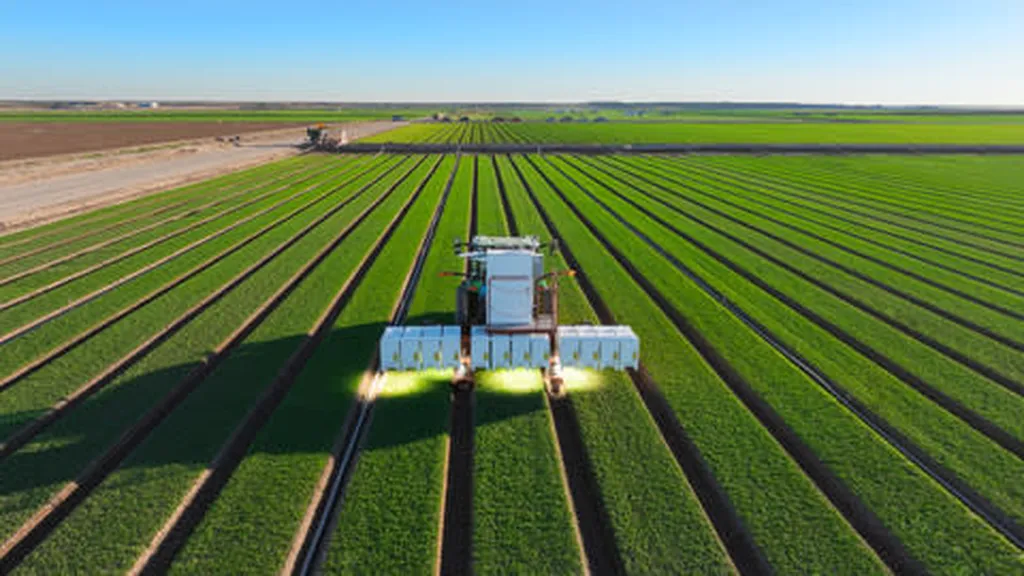
Researchers led by Sergio Monteleone of São Paulo’s Centro Universitário FEI are showing how the next wave of precision agriculture could trim both water and electricity bills across the world’s farms. Their study, published in *Discover Agriculture* (originally *Pesquisa Agropecuária*), argues that the missing link in many “smart-farm” roll-outs is not the hardware—drones, soil probes or center-pivot valves—but the irrigation schedule itself.
“Farmers can buy every sensor on the market, yet still irrigate on the same old calendar,” Monteleone notes. “What we’re trying to do is move the conversation from ‘how much data do we have?’ to ‘how do we turn that data into a better irrigation plan?’”
The team combined field case studies with a system-dynamics simulation that models water and energy flows under two sensing strategies: satellite weather services versus local weather stations. For a representative center-pivot corn field, the satellite feed consistently over-estimated evapotranspiration, nudging the model toward larger pump runs and higher electricity demand. Planned water use jumped 12 %, energy use 8 %, and associated power costs rose by roughly 9 % compared with the local station setup.
“Those percentages translate directly into kilowatt-hours that utilities have to generate and farmers have to pay for,” says Monteleone. “If the satellite network is your only source, you may be buying more grid power than the crop actually needs.”
The work also surfaces farmer behavior as a hidden variable. In interviews, growers confessed they rarely re-examine their irrigation thresholds once the system is live. Monteleone’s theoretical model therefore inserts “planning review cycles” and “energy-tariff alerts” as explicit factors that can steer adoption of precision irrigation.
For energy-sector strategists, the takeaway is twofold: first, utilities can partner with ag-tech firms to supply local weather feeds as a grid-balancing service; second, demand-response programs can target irrigation schedules rather than just HVAC or lighting. If the model’s 8 % energy swing holds across broader acreage, the cumulative effect on peak demand could be material.
Monteleone’s team is now scaling the simulation to cover multiple crops and pivot sizes. Early conversations with Brazilian co-operatives suggest that a 5 % reduction in pumping energy is enough to justify the hardware upgrade. That threshold may vary by region and tariff structure, but it underscores a larger point: irrigation planning is the quiet multiplier in the precision-ag equation.