
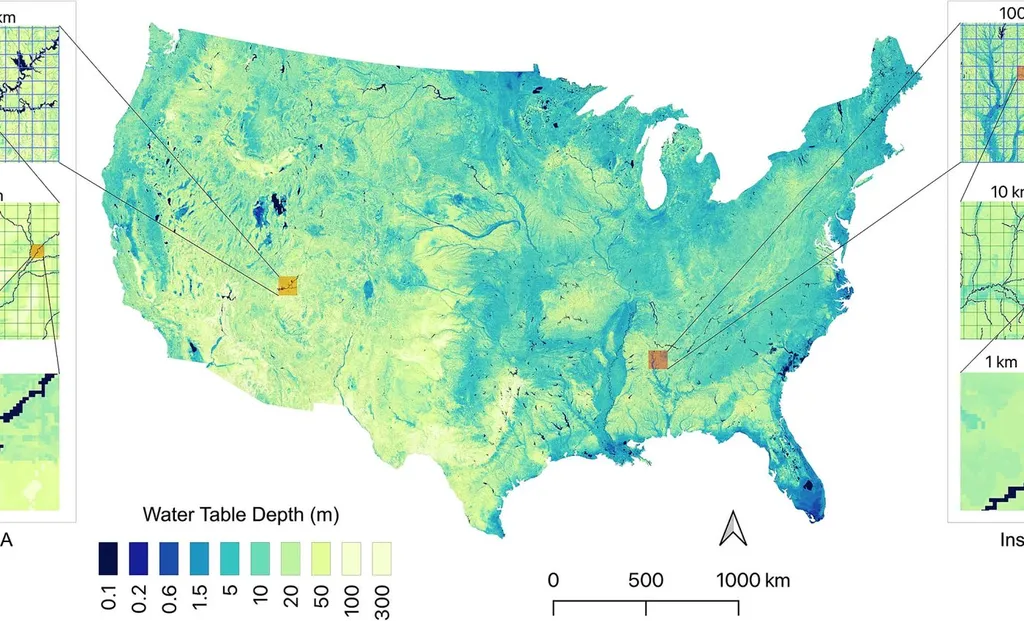
In a world where water scarcity threatens energy security, groundwater—the hidden lifeblood of industry—has become a critical asset. Research published in the *Journal of Groundwater Science and Engineering* (Chinese: 《地下水科学与工程》) by Adla Andalu, a civil engineer at Osmania University in Hyderabad, India, offers a breakthrough: artificial intelligence (AI) and machine learning (ML) could revolutionize how we find, manage, and protect this vital resource.
Andalu’s study isn’t just theoretical—it maps a practical path forward for industries that depend on water, including energy. “AI and ML aren’t replacing hydrologists or geologists,” she explains. “They’re giving us tools to see patterns in data that the human eye can’t catch—like subtle shifts in groundwater levels or contamination risks before they become crises.”
The implications for energy companies are significant. Oil and gas operations, thermal power plants, and renewable energy projects all rely on stable water access. AI-driven groundwater potential mapping can reduce exploration costs by pinpointing high-yield aquifers with satellite and geophysical data, cutting down on expensive drilling. Meanwhile, ML models trained on historical water quality data can predict contamination risks near industrial sites, helping operators avoid regulatory penalties and operational shutdowns.
One standout application is real-time groundwater forecasting. Traditional models often lag behind rapidly changing conditions. “We’re talking about systems that update every few hours, not months,” says Andalu. “For a desalination plant or a fracking operation, that kind of precision isn’t just useful—it’s a competitive advantage.”
The study also highlights a growing challenge: data scarcity. Many regions lack long-term groundwater records, forcing AI models to work with incomplete inputs. But Andalu sees opportunity in emerging technologies. “Remote sensing and IoT sensors are filling gaps faster than ever,” she notes. “In India, for example, satellite-based groundwater monitoring has already helped rural communities track depletion. Now, we’re adapting that for industrial use.”
For energy firms, integrating AI into water management isn’t just about sustainability—it’s about resilience. As climate change intensifies droughts and regulatory pressures rise, companies that adopt these tools early could secure their operations against water-related disruptions.
The future, Andalu suggests, lies in collaboration. “AI can process data, but it can’t replace field expertise,” she says. “The best results come when engineers, data scientists, and policymakers work together.”
As industries race to balance water use with growth, Andalu’s research offers more than a scientific advance—it’s a blueprint for smarter, safer, and more sustainable resource management.