
The disruption in global fertilizer trade, driven by geopolitical tensions around the Strait of Hormuz, has exposed vulnerabilities in food supply chains. With 70% of U.S. farmers reporting they can’t afford sufficient fertilizer, researchers at the University of Surrey are turning to an unexpected solution: human urine. While the idea may raise eyebrows, the science behind it is gaining traction as a way to recover nitrogen, phosphorus, and potassium—key nutrients for agriculture—from wastewater streams.
The Surrey team, led by lecturer Siddharth Gadkari, is refining a method to extract these nutrients using forward osmosis, a process that relies on semipermeable membranes to separate valuable compounds from waste. However, a critical challenge has been membrane fouling, where organic solids in urine clog the filtration system. The breakthrough came with pre-filtration, which removes much of the organic matter before osmosis, extending the membrane’s lifespan and reducing energy demands.
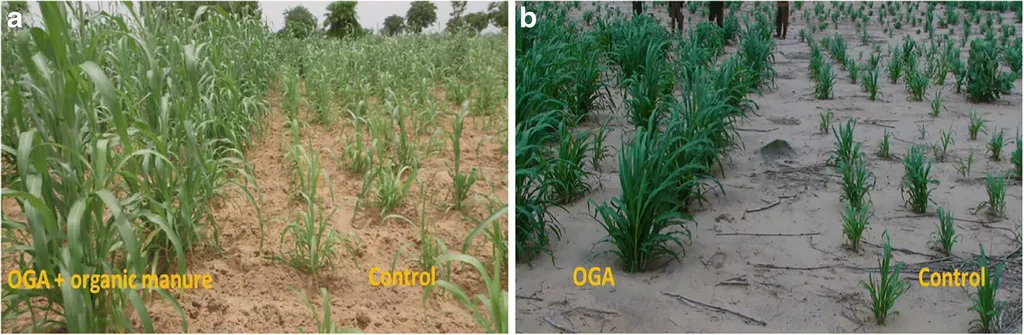
“Our pee is an underutilized resource,” Gadkari notes. “Even though it contains the key nutrients we need for agriculture, we currently treat it as waste.” The approach isn’t just theoretical. Other studies, such as one in Niger, have shown that urine can act as both a fertilizer and a pesticide when properly processed. Meanwhile, researchers elsewhere are exploring its potential to generate electricity in microbial fuel cells.
The urgency behind this research isn’t just economic—it’s environmental. The energy-intensive production of synthetic fertilizers contributes to air pollution and climate change. By recovering nutrients from urine, wastewater treatment facilities could reduce their processing loads while offering a nearly limitless, low-cost alternative. Each person produces up to 1.95 liters of urine daily, making it a readily available resource.
Gadkari emphasizes the practicality of the approach: “What is particularly exciting is that we have demonstrated how this system behaves under realistic conditions using real human urine. … This technology can move much closer to practical, long-term use.” If scaled, this method could reshape nutrient recovery in wastewater management, offering a sustainable path forward for agriculture amid rising fertilizer costs and geopolitical instability. The next step is addressing fouled membranes—a challenge that, if solved, could unlock a new era of circular resource management.