
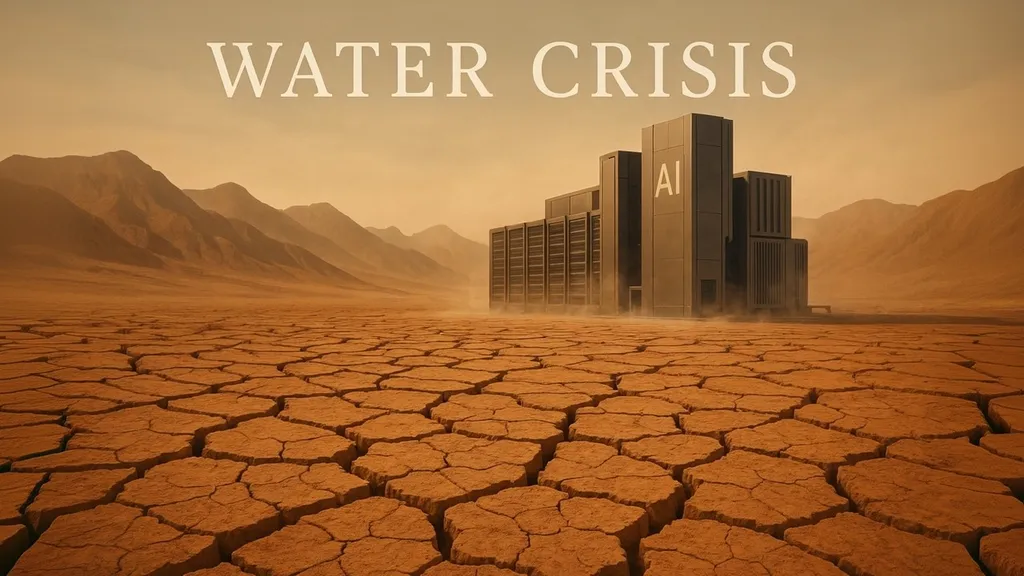
The rapid expansion of artificial intelligence is reshaping industries, but it’s also quietly reshaping water use. Data centers, the backbone of AI and digital infrastructure, are consuming water at an accelerating rate—often in regions where water is already scarce. A new commentary in *AGU Advances* (published by the American Geophysical Union) argues that the lack of transparency around this water footprint could have serious consequences for both industry and communities.
Lead author Ana Pinheiro Privette, a researcher at the Center for Secure Water at the University of Illinois Urbana-Champaign, warns that while national water usage by data centers may appear small compared to agriculture or municipalities, their localized impact can be disproportionately severe. “The issue isn’t just how much water they use in total,” she explains, “but where and when they use it. A single hyperscale data center in a drought-stricken region can strain local water supplies in ways that ripple through the community.”
The water footprint of data centers extends beyond cooling towers and humidification systems. It includes the water used to generate the electricity powering servers, as well as the indirect water demands embedded in supply chains—from semiconductor manufacturing to construction materials. For energy companies, this presents a growing challenge: as data centers proliferate to support AI workloads, their operational water needs could conflict with power generation priorities, particularly in water-cooled thermal plants.
Privette emphasizes that without better data, policymakers and industry leaders are flying blind. “We don’t have standardized reporting on water use in this sector,” she says. “That makes it impossible to plan effectively for droughts, to allocate resources fairly, or to incentivize more efficient technologies.” The commentary calls for mandatory disclosure of water usage by data centers, similar to energy efficiency reporting, to enable smarter infrastructure planning and corporate accountability.
For the energy sector, the implications are clear. Data centers are becoming a major customer for utilities, but their water intensity could create vulnerabilities in regions where water scarcity is already driving regulatory constraints. Companies investing in AI infrastructure may soon face pressure—not just from environmental groups, but from investors and insurers—to demonstrate sustainable water management.
The research suggests that the future of digital growth may hinge on how well the industry can balance computational demand with resource resilience. As Pinheiro Privette puts it: “We’re building the infrastructure of tomorrow today. If we don’t account for water now, we’ll pay for it later—both in dollars and in disrupted lives.”