
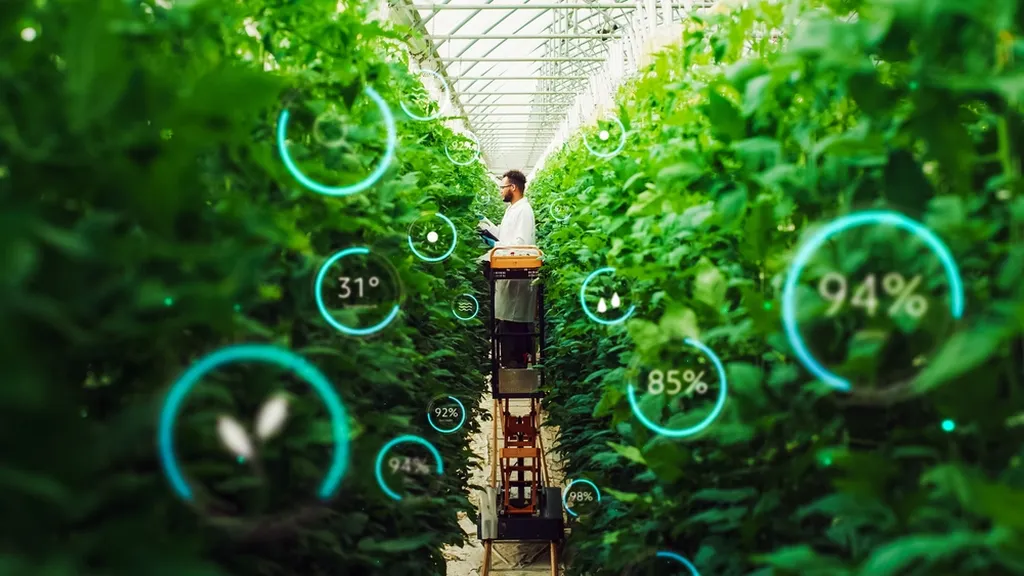
Carlos Diego Rodríguez-Yparraguirre never set out to revolutionize farming. The Peruvian agronomist, now a doctoral candidate at Universidad Nacional de Trujillo, was simply trying to make sense of the noise in his data. Between 2020 and 2025, he and his team sifted through 101 peer-reviewed studies on digital tools in agriculture—from drone-mounted multispectral cameras to blockchain ledgers tracking every seed from soil to shelf. What they uncovered wasn’t just another tech trend; it was a quiet but seismic shift toward a more efficient, transparent, and sustainable way to grow food.
The research, published in *Earth* (formerly *Tierra*), reveals that digital technologies are no longer experimental add-ons—they’re becoming the backbone of modern agriculture. Rodríguez-Yparraguirre and his team found that deep learning models can now diagnose crop diseases with 90–99% accuracy, smart irrigation systems are cutting water use by 10–30%, and automated greenhouses are trimming energy consumption by 20–30%. These aren’t just academic benchmarks; they’re real-world gains that translate directly into lower operational costs and higher yields. “We’re moving from reactive farming to predictive farming,” Rodríguez-Yparraguirre says. “It’s not about replacing farmers—it’s about giving them the tools to make better decisions, faster.”
For the energy sector, the implications are hard to ignore. Every kilowatt-hour saved in irrigation or greenhouse automation is a kilowatt-hour that doesn’t need to be generated, transmitted, or paid for. In regions where water and power are scarce, these efficiencies aren’t just incremental—they’re transformative. Consider the case of smart irrigation: by using soil moisture sensors and AI-driven scheduling, farmers can reduce water waste while maintaining or even improving crop output. That means less strain on aquifers and, in turn, less demand for energy-intensive desalination or deep-well pumping. “The energy-water nexus isn’t just a concept anymore,” Rodríguez-Yparraguirre notes. “It’s a measurable equation.”
Yet the study also sounds a cautionary note. Nearly 40% of the research highlighted gaps in interoperability—farmers and agribusinesses are still struggling to integrate systems from different vendors. Standardized performance metrics are lacking, and long-term field validation remains rare. Without these, the promise of digital agriculture risks becoming fragmented, with some regions leapfrogging ahead while others fall further behind. Rodríguez-Yparraguirre argues that the next phase of digital agriculture will depend on collaboration: “We need open protocols, shared datasets, and cross-platform tools. The technology exists; what’s missing is the ecosystem to support it.”
So what’s next? Rodríguez-Yparraguirre envisions a future where blockchain doesn’t just track produce but also verifies carbon credits, where edge computing processes data in real time on the farm itself, and where predictive models account for climate variability with unprecedented precision. For energy companies, this could mean new revenue streams—selling demand-response services to farms that can curtail irrigation during peak hours, or partnering with agribusinesses to co-develop microgrids powered by renewable energy and optimized for digital farming.
The digital transformation of agriculture isn’t just coming; it’s already here. The question now is whether the energy sector will seize the opportunity to power it—or risk being left behind.