
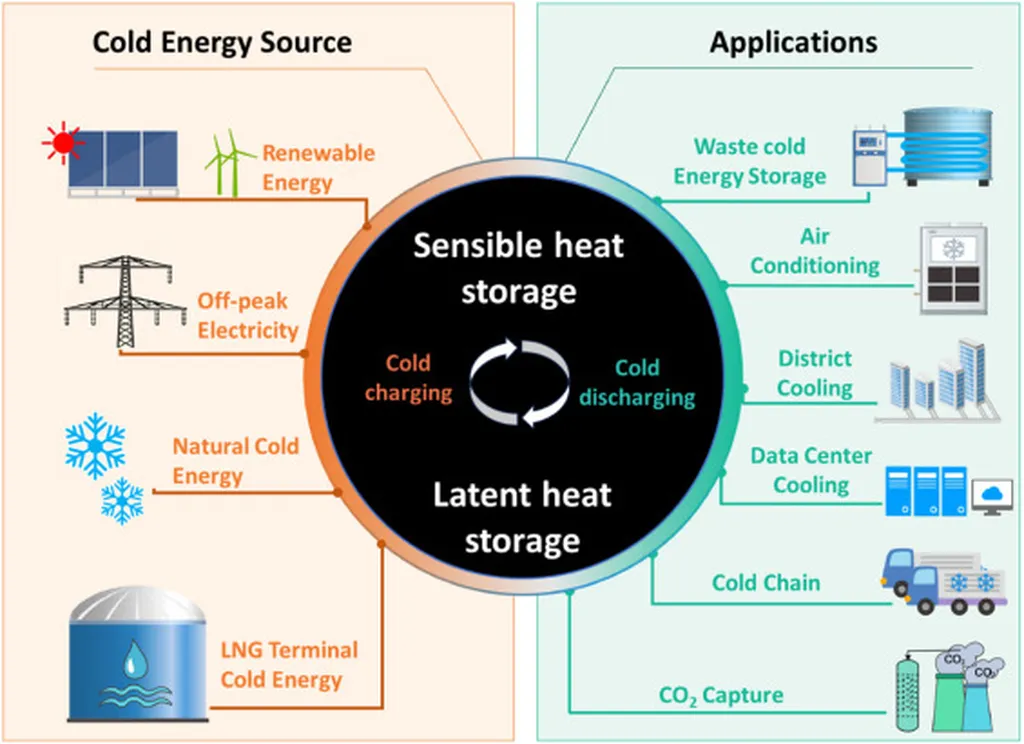
In the rolling hills of rural South Korea, where the first light of dawn touches fields of ripening persimmons and dairy cows low in the morning mist, a quiet revolution is underway. It’s not the kind that makes headlines, but for farmers and energy innovators, it could be just as transformative. At the heart of this change is a technology that quietly stores energy in the cold—Cold Thermal Energy Storage (CTES)—and a new review by researcher Ahsan Mehtab, based at Sunchon National University, is showing how it could reshape postharvest cooling across the world’s agricultural belts.
Mehtab’s review, published in *Clean Technologies* (translated from *Clean Technologies* in Korean: *청정기술*), pulls together the latest advances in CTES—systems that store cold energy like a battery stores electricity, but without the same cost or environmental burden. Unlike traditional refrigeration, which guzzles power and falters when the grid flickers, CTES systems can be powered by solar panels during the day and release their stored cold at night, precisely when farmers need it most.
“In many rural areas, up to 40% of fresh produce spoils before it even reaches the market,” Mehtab notes. “That’s not just food waste—it’s lost income, wasted water, and squandered energy. CTES, especially when integrated with smart farming, offers a way to cut those losses while using clean energy.”
The systems under review range from ice-based tanks to chilled-water loops and advanced phase-change materials (PCMs) that store and release thermal energy during melting and freezing. What makes this research stand out is its focus on integration: pairing CTES with IoT sensors, predictive controls, and solar PV arrays to create resilient, off-grid cold chains in villages and small farms.
Commercially, the implications are significant. For energy companies, CTES represents a new frontier in demand-side management. Unlike lithium-ion batteries, which degrade over time and require rare minerals, cold storage systems can last decades with minimal maintenance. They also reduce peak electricity demand by shifting cooling loads to off-peak hours—something utilities have long sought to stabilize grids.
“This isn’t just about cooling,” says Mehtab. “It’s about building a low-carbon, decentralized energy ecosystem where rural communities become self-sufficient in both food and power.”
The paper also highlights gaps: better ways to model system performance across scales, improving the stability of PCMs, and developing AI-driven controls to optimize when and how cold is released. These aren’t just technical challenges—they’re commercial opportunities. Companies that can solve them stand to dominate the next wave of rural energy infrastructure.
As global food systems strain under climate change and energy prices rise, technologies like CTES offer more than efficiency—they offer resilience. And in places where the grid is unreliable and food security is fragile, that could mean the difference between harvest and hardship.
For energy firms, agribusinesses, and policymakers, the message is clear: the future of cooling isn’t just electric—it’s thermal, strategic, and deeply integrated with the rhythms of the land.