
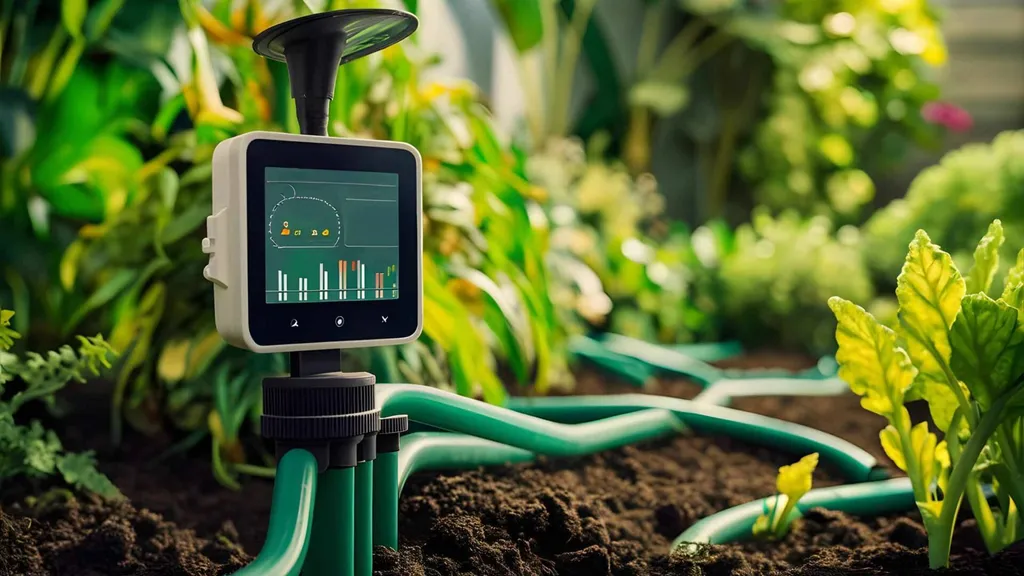
In the sun-baked fields of low- and middle-income countries, where every drop of water and watt of energy counts, a breakthrough in irrigation technology could redefine sustainable farming. Carolyn Sheline, a researcher at the Massachusetts Institute of Technology (MIT) and the K. Lisa Yang Global Engineering and Research (GEAR) Center, has led a study that puts precision irrigation to the test under real-world conditions. The findings, published in *Smart Agricultural Technology* (originally *Tecnología Agrícola Inteligente*), suggest that the Predictive Optimal Water and Energy Irrigation (POWEIr) controller could be a game-changer—not just for farmers, but for the energy sector as well.
Sheline’s team evaluated the POWEIr controller in solar-powered drip irrigation (SPDI) systems, which are gaining traction as a way to boost water efficiency while reducing reliance on fossil fuels. Unlike traditional irrigation methods, which often waste water and energy, the POWEIr controller uses machine learning and model predictive control to optimize water and energy use. The results were striking: over three growing seasons, the controller slashed water and energy consumption by up to 44% and 43%, respectively, without compromising crop yields.
What makes this particularly compelling is the controller’s reliance on solar power, augmented by a small buffer battery to ensure reliability. Sheline noted, “The system was designed to work within the constraints of resource-constrained farming environments, where both water and electricity can be scarce.” Yet, the study also uncovered an opportunity for further optimization: increasing solar energy use by about 40% could have eliminated the need for the buffer battery entirely, making the system even more sustainable.
For the energy sector, this research signals a growing intersection between agriculture and renewable energy. SPDI systems, which are already being deployed in regions like sub-Saharan Africa and South Asia, could become more cost-effective and scalable with controllers like POWEIr. The potential commercial impact is significant—lower operating costs, reduced fossil fuel dependence, and greater adoption of precision irrigation among farmers with limited technical expertise.
As the global push for sustainable agriculture intensifies, technologies like POWEIr could bridge the gap between innovation and accessibility. Sheline’s work underscores a critical point: the future of farming may not just depend on smarter machines, but on smarter ways to power them.