
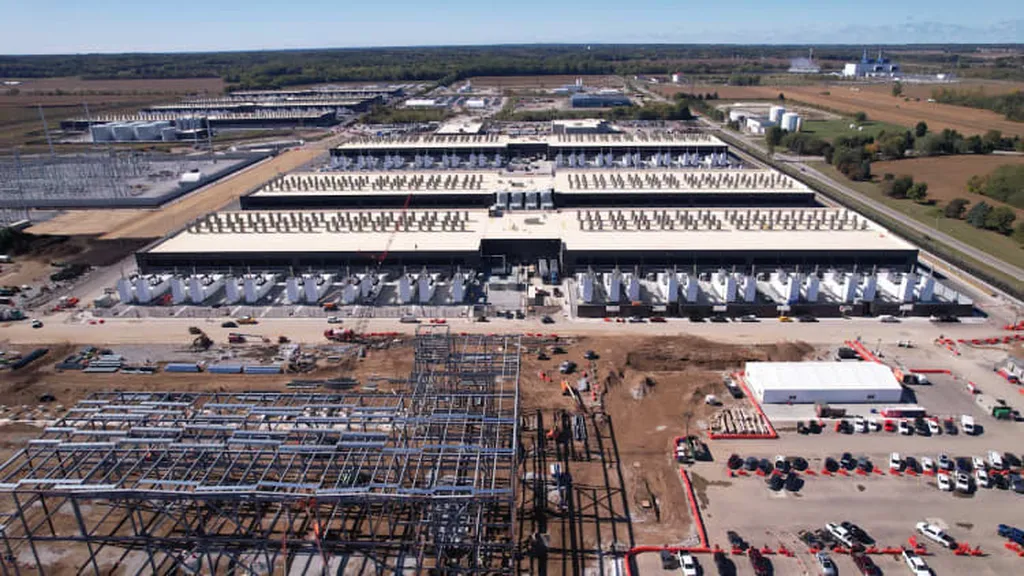
Amazon’s push into Mississippi’s water-stressed data center market is about more than megawatts—it’s about megagallons. The new reclaimed water system, developed with Veolia and slated to go live in 2027, marks the first time Amazon will use treated wastewater to cool its hyperscale facilities in the state. Instead of tapping municipal supplies, Big Black River withdrawals, or deep aquifers, Veolia will process up to 83 million gallons annually from nearby plants, turning what would have become effluent into industrial cooling feedwater. The move directly addresses one of the most contentious questions in Mississippi’s rapid data center expansion: how to keep growth from draining finite drinking water reserves.
Mississippi has gambled heavily on data centers, approving incentives that now total in the hundreds of millions for Amazon alone. State leaders cite job creation and future tax revenue, but critics argue the deals have been negotiated with too little transparency about long-term resource strain. The arrival of liquid-cooled servers—more water-intensive but less electricity-hungry—has only intensified the debate. Amazon’s pledge to become “water positive” by 2030 across its direct operations offers a counter-narrative, one that hinges on reclaiming rather than consuming potable water.
Veolia’s modular, containerized treatment units are designed to be portable and replicable, suggesting this could become a template for other projects. The system will rely on real-time AI monitoring to optimize chemical dosing, detect leaks, and predict maintenance needs, part of a broader push by Veolia to embed predictive analytics into its global water networks. Will Hewes, Amazon’s global water stewardship lead, says the collaboration is less about today’s infrastructure and more about tomorrow’s playbook: “Through our collaborative work on AI applied to water treatment, Veolia will be able to further drive innovation and enhance the efficiency of on-site teams, thanks to automated analytics, actionable recommendations, optimized inventory management, and streamlined maintenance.”
Yet key details remain unsettled. Local utilities and regulators still must approve sourcing and discharge plans, and the exact treatment chemistry will depend on the composition of incoming wastewater. Veolia’s CEO Estelle Brachlianoff frames the project as a balance between growth and conservation: “Reclaimed water can replace water that would otherwise be drawn from drinking water systems.” That framing may paper over deeper tensions—between short-term economic gains and long-term ecological limits, between corporate sustainability pledges and community skepticism.
If the system scales, it could redefine how data center cooling is financed and permitted in water-scarce regions. It also normalizes the idea that treated effluent, once an afterthought, can become a strategic resource. The question now is whether Mississippi’s regulatory and utility frameworks can evolve as quickly as the technology—and whether residents will trust claims of net-positive water use when their taps sit downstream of data halls.