
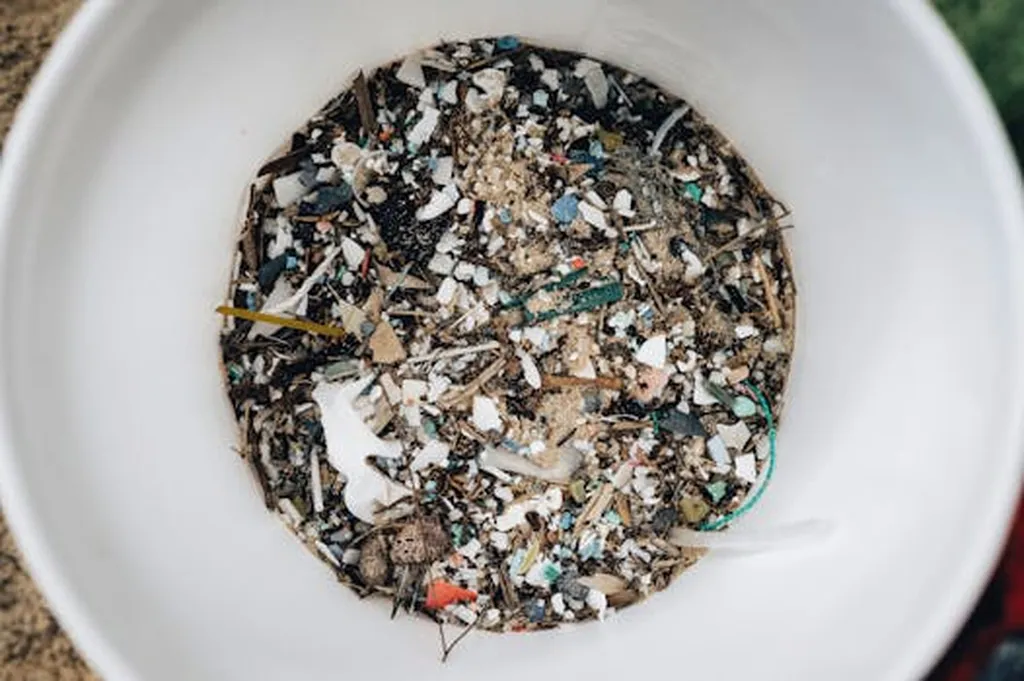
The escalating presence of microplastics in global water systems isn’t just an environmental concern—it’s a looming operational challenge for energy producers, water utilities, and industrial operators alike. Qingyun Bai, lead author of a groundbreaking review published in *Engineering Science and Technology* (工程科学与技术), highlights a critical insight: “Traditional water treatment processes weren’t designed to handle these synthetic intruders. Microplastics slip through filtration and settle into ecosystems, where they accumulate, migrate, and persist—posing risks to both nature and infrastructure.” This isn’t academic alarmism; it’s a signal that industries reliant on clean water—from power generation to municipal supply—must rethink treatment strategies or face rising compliance costs and reputational risks.
Bai’s team at an undisclosed affiliation (noted as “Unknown” in the paper) systematically examined advanced oxidation processes (AOPs)—chemical and photochemical methods that generate highly reactive species to break down stubborn pollutants. Among the most promising findings: photocatalytic oxidation using titanium dioxide and zinc oxide can degrade polypropylene by 65% in two weeks under visible light, while silver-doped TiO₂ boosts polyethylene removal to over 80%. These aren’t marginal gains. For energy operators managing cooling water or wastewater with high organic loads, such efficiency translates directly into lower chemical and energy inputs—key levers for operational cost control in a sector where margins are increasingly squeezed by carbon pricing and regulatory scrutiny.
But the real commercial pivot lies in ozone-based AOPs. Bai notes that ozone doesn’t just oxidize—it transforms the physical structure of microplastics. “By increasing surface tension and reducing hydrophobicity, ozone weakens the polymer matrix, making it more vulnerable to further breakdown,” he explains. In hybrid systems, this means faster throughput and reduced fouling in downstream processes—critical for maintaining heat exchange efficiency in thermal power plants or preventing membrane clogging in desalination facilities.
The energy sector should also take note of sulfate radical-based AOPs. Unlike hydroxyl radicals, which are fleeting and pH-sensitive, sulfate radicals persist longer and work across a wider pH range—ideal for treating variable-quality process water. Ultraviolet-activated persulfate, for instance, has shown remarkable ability to dechlorinate PVC, releasing 58.5 mg/L of chloride in 35 hours. Such precision could allow refineries and chemical plants to meet stringent discharge limits without costly tertiary treatment retrofits.
Still, challenges remain. Bai cautions that real-world water matrices—laced with natural organic matter, salts, and competing ions—can quench radicals and reduce efficiency. “Lab results overperform in the field,” he admits. That’s why the paper calls for catalyst innovation, green process integration, and hybrid treatment trains—strategies that resonate with energy operators seeking scalable, low-footprint solutions.
As industries race to align with circular economy goals and tighter environmental standards, Bai’s synthesis points to AOPs not as a silver bullet, but as a critical enabler of next-generation water resilience. For the energy sector, that means more than compliance—it means competitive advantage. Those who invest early in AOP-ready infrastructure and process optimization could unlock significant operational efficiencies while future-proofing against tightening regulations. The paper, published in *Engineering Science and Technology*, doesn’t just chart a scientific path—it maps a commercial one.