
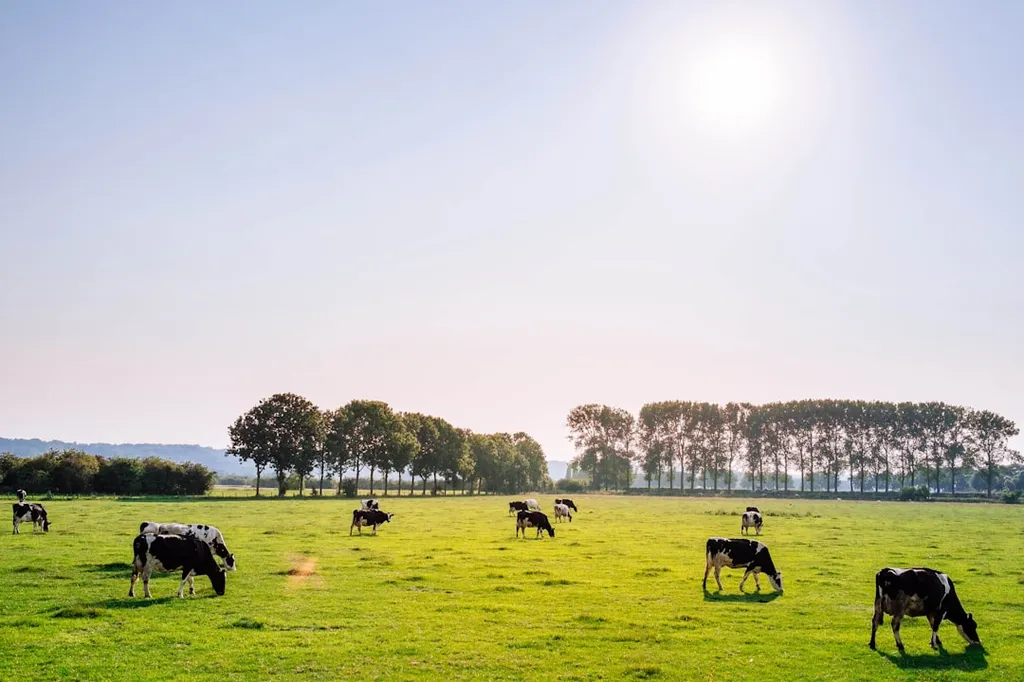
Tobias Parodi at the Universidad de Córdoba has just pulled together what may become the definitive map of the dairy industry’s sensor revolution. Over the past fifteen years, Parodi and his team combed through fifty peer-reviewed studies—thirty-eight from the historical record (2010-2023) and twelve fresh papers published in the first ten days of November 2025—to show how small, connected devices are quietly rewriting the rules of milk production, energy use and animal welfare.
The headline is not hard sensors, but the data streams they unlock. Wearable collars that track a cow’s movement every second, rumen boluses that ping pH levels in real time, and ceiling-mounted thermal cameras that map heat-stress zones in the milking parlour are feeding continuous streams into cloud platforms. “We’re moving from reactive to predictive,” Parodi notes. “A spike in rumen acidity can trigger an automated ration adjustment before the herd ever shows clinical signs of acidosis.” In one 2024 pilot, a single farm in Galicia cut methane emissions by 8 % simply by using a CO₂/NH₃ sensor array to fine-tune ventilation schedules and reduce idle diesel-run fans.
For energy managers, the commercial payoff is immediate. Milk cooling alone can account for up to 40 % of a dairy’s electricity bill. Parodi’s corpus shows that in-line milk sensors measuring somatic cell counts and butterfat can now be paired with predictive algorithms that pre-cool only the vats expected to fill within the next hour, shaving peak-load demand by 12-18 % in high-production seasons. “That translates to lower kWh tariffs and fewer grid upgrades,” Parodi says. Renewable microgrids—biogas plus solar—are also getting smarter. A 2023 case study from Minas Gerais used environmental THI (temperature-humidity index) sensors to curtail biogas generation during peak solar output, storing the surplus as hydrogen for the evening milking shift.
Yet the review also sounds a cautionary note. Only 18 % of the studies validated sensor outputs against ISO-certified reference methods, and fewer than a third tested devices under low-infrastructure conditions typical of smallholder cooperatives. “We have the technology,” Parodi remarks, “but we still lack plug-and-play standards and open datasets that let a farmer in Patagonia replicate what worked in Bavaria.” Without those, the energy savings and welfare gains risk remaining confined to large, well-funded dairies.
Published in *South Sustainability* (Sustentabilidad del Sur), the paper calls for policy roadmaps that bundle sensor adoption with micro-credit lines for cooperatives, interoperable data-sharing protocols, and benchmarking labs that can certify devices for tropical humidity or dusty feedlots. If those pieces fall into place, the next phase could see dairy farms—not just data centres—becoming net exporters of clean electrons, turning manure into megawatts and heat maps into kilowatt-hours.