
Zhao Peihong and his team at the National Engineering Research Center of Eco-Environment in the Yangtze River Economic Belt, under China Three Gorges Corporation, have uncovered a stark inefficiency in wastewater treatment plants that could reshape how the sector approaches energy consumption. Their study, published in *Gongye shui chuli* (Industrial Water Treatment), zeroes in on the aeration systems—often the most energy-intensive component of wastewater treatment—and reveals a troubling pattern: plants are pumping in far more air than necessary.
The research began with a simple question: Why are aeration systems consuming so much energy without proportional gains in treatment efficiency? By analyzing a plant in southern China, Zhao’s team constructed a model that factored in real-world variables like temperature and rainfall, which traditional models often overlook. “We found that the actual oxygen supply was, on average, 1.5 times higher than the theoretical demand,” Zhao explains. “That’s not just wasteful—it’s a missed opportunity for significant energy savings.”
The implications are hard to ignore. The team’s optimized aeration strategy, which adjusts air flow based on real-time oxygen transfer efficiency, slashed energy use by 31.5% in the plant’s blowers and reduced aeration volume per unit of water by 34.8%. The numbers speak for themselves: from 3.85 cubic meters of air per cubic meter of water down to 2.51, with power consumption dropping from 0.089 kWh/m³ to 0.061 kWh/m³. For an industry where energy costs can account for up to 60% of operational expenses, these are game-changing figures.
What makes this study particularly compelling is its practicality. Zhao’s team didn’t just theorize—they implemented their findings in an active plant, proving that the model works in real-world conditions. Their adaptive oxygen demand calculation method and intelligent control strategy offer a blueprint for other facilities to follow. As Zhao notes, “The key isn’t just about reducing energy use; it’s about doing it without compromising treatment performance. We’ve shown that precision in aeration can achieve both.”
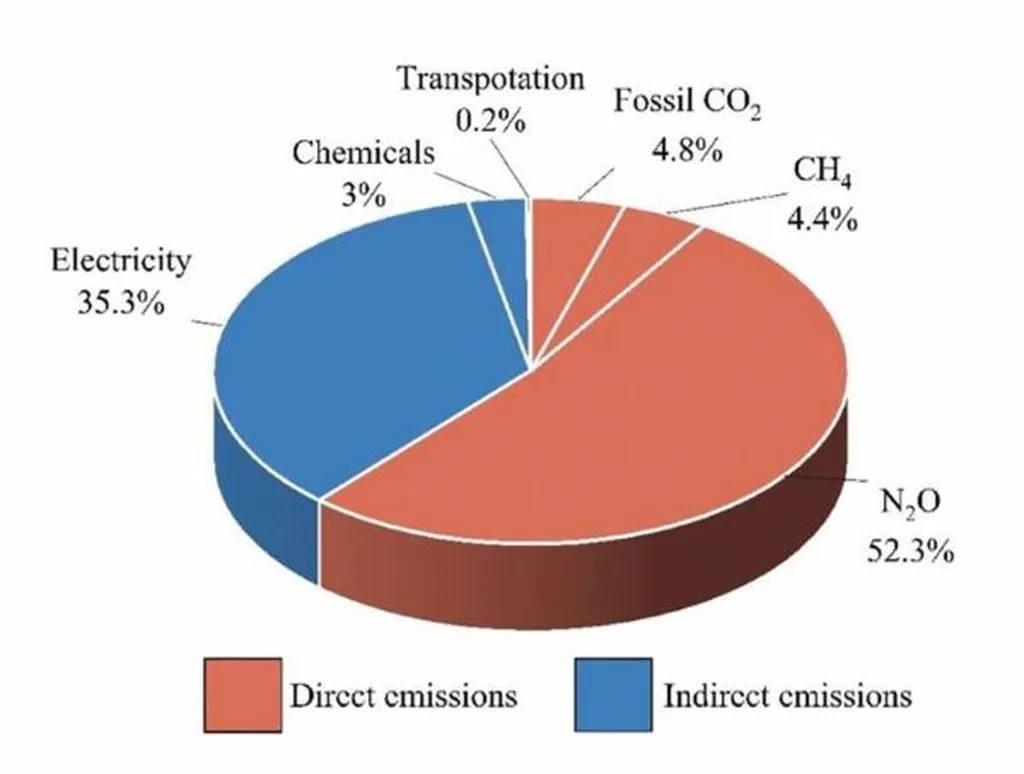
For the energy sector, this research is a wake-up call. Wastewater treatment plants are major consumers of electricity, and aeration systems are their biggest energy hogs. If Zhao’s approach scales—even partially—it could ease grid pressures, lower operational costs, and cut carbon emissions. The challenge now is adoption. Will plant operators embrace real-time monitoring and adaptive strategies, or will inertia keep them locked into outdated practices?
One thing is clear: the future of wastewater treatment may hinge on how well the industry can balance efficiency with performance. Zhao’s work suggests that the answer lies in smarter, data-driven aeration—a shift that could redefine the sector’s energy footprint. As the study demonstrates, the technology exists. The question is whether the industry is ready to use it.