
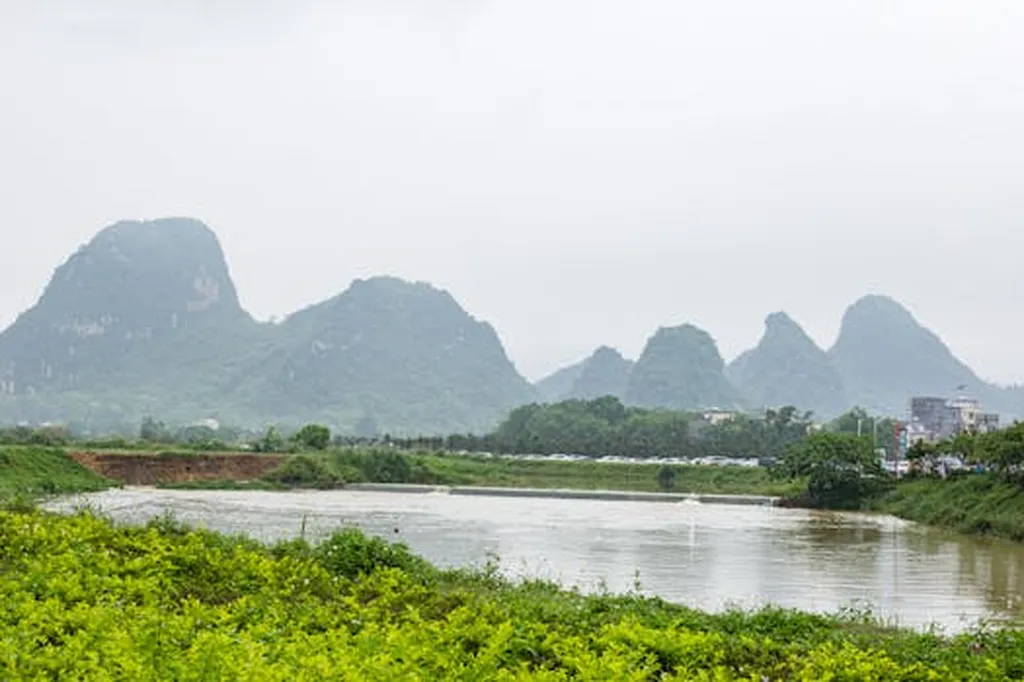
The Yepuqu alpine karst basin, a tributary of the Lhasa River in northern Xizang, is emerging as a critical case study in water resource management for the Qinghai-Xizang Plateau—the so-called “Asian Water Tower.” According to lead author Hongwei Liao and his team at the Institute of Karst Geology in Guilin, Guangxi, the basin’s water quality reflects a delicate balance between natural geological processes and human activity, with implications that stretch far beyond its mountainous borders.
Liao and colleagues collected and analyzed 21 water samples from both surface and groundwater sources in the basin. Their findings reveal that calcium (Ca²⁺) and bicarbonate (HCO₃⁻) dominate the hydrochemical composition, with over 50% of cations and anions in the system belonging to these ions. Groundwater primarily exhibited a HCO₃-Ca type, while surface water showed a mixed HCO₃·SO₄-Ca type—patterns that point to widespread calcite dissolution as the main driver of water mineralization. “The dominance of calcite dissolution in both surface and groundwater suggests that natural weathering is the primary force shaping water chemistry here,” Liao explained. “But human activity—especially agricultural nitrogen inputs—is also leaving a measurable footprint.”
The study’s water quality assessment delivered a nuanced picture. Single-factor evaluation classified 86% of samples as Class III (suitable for drinking with conventional treatment), while 14% fell into Class IV or V (requiring advanced treatment). However, when the team applied a comprehensive pollution index, the basin was overall rated as high-quality water. “The discrepancy between the two methods highlights how assessment frameworks can shape perceptions of risk,” noted Liao. “A dual-track system—combining single-factor qualitative checks with quantitative pollution indices—could help policymakers avoid over- or under-regulation.”
For industries operating in or sourcing from high-altitude karst regions—particularly hydropower, mining, and agriculture—the implications are clear. Agricultural runoff rich in nitrogen, primarily from fertilizers, is a key concern. Liao’s team recommends an integrated approach: crop rotation to reduce nitrogen demand, precision fertilization using soil sensors, and transforming drainage ditches into ecological filter beds. “These aren’t just environmental measures,” said Liao. “They’re operational strategies that can stabilize water quality, protect infrastructure, and reduce long-term treatment costs.”
The research, published in *Carsologica Sinica* (translated as *Karst Science*), also sheds light on the broader ecological role of the Yepuqu basin. As a headwater tributary of the Lhasa River, its health influences downstream water security across Xizang and beyond. Understanding how natural dissolution and human inputs interact here could inform water management strategies for other alpine karst systems across the Himalayas and the Tibetan Plateau—regions critical to regional energy and food security.
For energy companies investing in hydropower or exploring mineral resources in karst terrains, Liao’s work underscores the need for proactive water monitoring and adaptive management. “You can’t manage what you don’t measure,” he said. “In high-altitude karst basins, small changes in land use or climate can cascade into big shifts in water chemistry. The companies that integrate these insights early will be better positioned to navigate regulatory and operational risks.”
As climate change and development pressures intensify across the plateau, studies like this one are not just academic—they’re a blueprint for resilience. And in a region where water is both life and power, that blueprint could determine who thrives in the years ahead.